Sometimes you wake up sick, have a last-minute appointment, or need to take an unexpected day away from your classroom. When that happens, having reliable art sub plans ready to go can make all the difference.
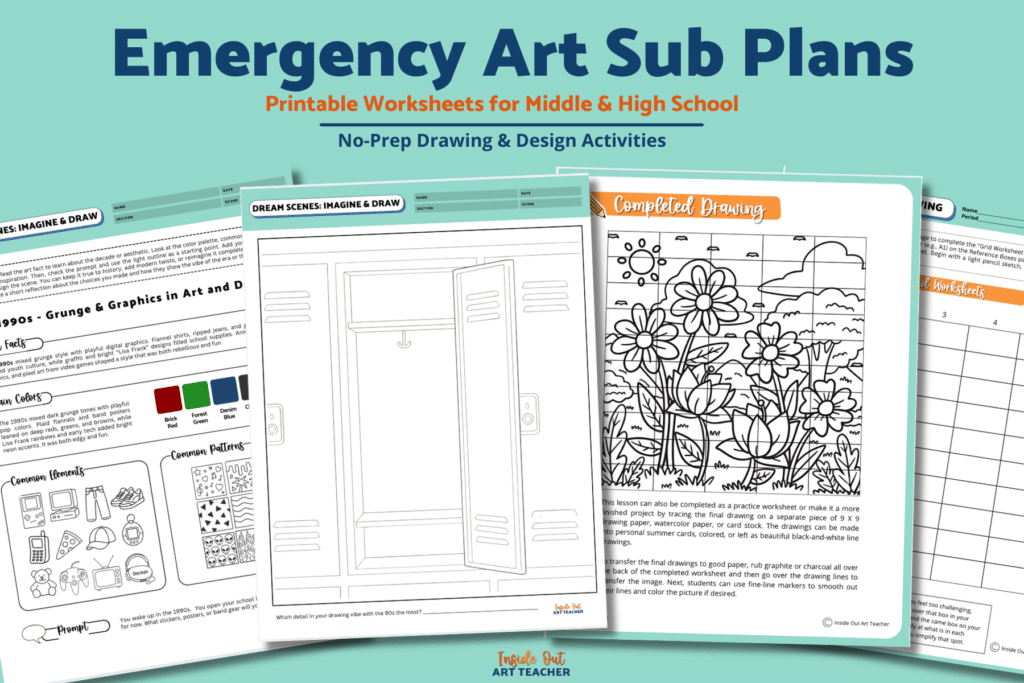
The challenge is that many substitute teachers aren’t comfortable teaching complex art projects, especially when lessons require demonstrations or specialized materials. That’s why printable art worksheets and simple drawing activities are some of the most effective emergency art sub plans for middle school and high school classrooms. These activities allow students to work independently while still practicing important art skills.
In this post, you’ll find a collection of easy art worksheets and no-prep drawing activities that work well for substitute teacher days. These printable activities help keep students focused, creative, and productive even when you’re not there to guide them.
If you’re building a backup plan for unexpected absences, explore our full collection of art sub plans and emergency art activities designed to keep middle and high school students engaged.
Whether you’re preparing emergency art sub plans, organizing a substitute binder, or simply looking for no-prep art lessons that students can complete independently, these worksheets can help keep your classroom running smoothly.
Below you’ll find some of my favorite art worksheets and drawing activities for sub plans that consistently keep students engaged while reinforcing important creative skills.
Of course, great worksheets are only part of a successful sub day. If you want a full system for organizing your classroom, instructions, and student expectations when you’re out, you can read my guide on how to prepare for a substitute teacher in the art classroom.
If you want a full collection of print-and-go emergency art activities, explore this complete guide to art sub plans and no-prep worksheets for middle and high school.
Jump to the type of art sub plan you need:
- Puzzle-Style Drawing Activities
- Drawing Skill Review Worksheets
- Elements and Principles Worksheets
- Creative Classroom Worksheets That Work Across Subjects
What Makes a Good Art Sub Plan?
Not every art activity works well when a substitute teacher is in charge of the classroom. The best art sub plans are simple, structured, and allow students to work independently while still practicing important creative skills.
When planning emergency art sub plans, it helps to choose activities that:
• require minimal supplies
• include clear instructions for substitute teachers
• allow students to work independently
• reinforce drawing or design skills
• keep students engaged even without demonstrations
This is why printable art worksheets and structured drawing activities work especially well for substitute teacher days. They give students clear directions and allow them to focus on creativity while keeping the classroom running smoothly.
The worksheets below are some of my favorite no-prep art activities for sub plans because they are easy for substitutes to manage and still provide meaningful creative practice for students.
If you want to make substitute days run even more smoothly, you can also read my guide on how to prepare for a substitute teacher in the art room.
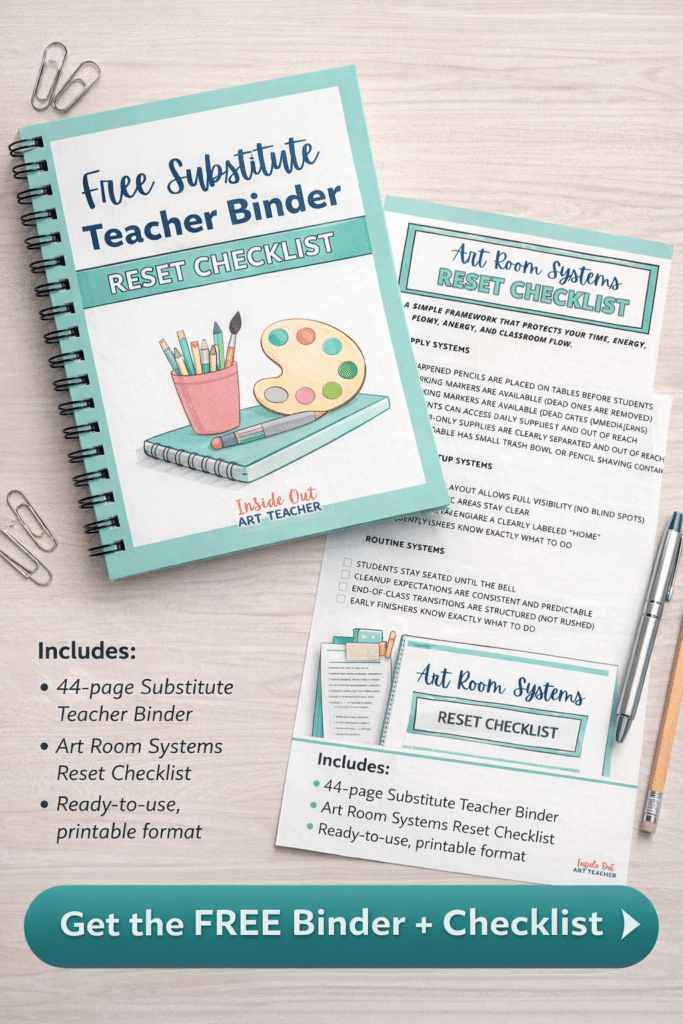
If you’d like a ready-to-use system, you can also download my free substitute teacher binder for art teachers to help keep instructions, class lists, and lesson plans organized.
Puzzle-Style Drawing Activities for Emergency Art Sub Plans
Mystery grid drawing worksheets and grid drawing puzzles are some of the most reliable activities for art sub plans because they immediately engage students in observation and problem-solving.
At first glance, students receive what appears to be a blank grid or a partially filled worksheet. As they carefully follow the numbered or coded squares, they begin to uncover a hidden image one section at a time. The process feels almost like solving a visual puzzle, which keeps students focused and curious about what the final picture will reveal.
Because the activity is structured and step-by-step, students don’t need strong drawing skills to participate successfully. They simply follow the grid clues, fill in each section, and watch the mystery image gradually appear.
This element of discovery keeps students motivated and working independently, making mystery grid drawing worksheets especially effective on substitute teacher days. They require very little explanation while still encouraging careful observation, patience, and attention to detail.
In my classroom, I also use mystery grid drawings as the starting point for larger art projects. After students complete the puzzle drawing on the worksheet, they transfer the image to larger drawing paper and begin adding their own creative details, patterns, or typography. This turns a simple grid activity into a more developed artwork while still giving students a clear starting point.
If you’d like to see an example of how this works in a full lesson, you can see how I use this approach in my Neurodoodle Typography Summer Art Project, where students begin with a structured drawing and then expand it into a larger creative design
Popular Mystery Grid Drawing Worksheets for Sub Plans
- Sports Mystery Grid Drawing Worksheets
- Seasonal Mystery Grid Drawing Worksheets
- Holiday Mystery Grid Drawing Worksheets
- Animal Mystery Grid Drawing Worksheets
- Summer Mystery Grid Drawing Worksheets
- Spring Mystery Grid Drawing Worksheets
Drawing Skill Review Worksheets for Substitute Teacher Days
Some art worksheets work best as skill review activities, especially when students have already been introduced to the concept by their art teacher. Substitute teacher days can be a great opportunity for students to practice and reinforce drawing techniques they have previously learned.
Worksheets that focus on shading, value, and drawing accuracy help students slow down and pay attention to how they observe and represent objects. Because these activities build on existing skills, students can work more independently while still strengthening their drawing abilities.
For example, value scale practice, shading worksheets, and X-grid drawing activities can be effective review exercises. These worksheets guide students step-by-step as they refine their understanding of light, shadow, and proportion.
However, if students have never been introduced to shading techniques before, it’s usually better to save these activities for a regular class period when you can demonstrate the concepts and guide students through the process. When used as a review activity, though, these worksheets provide meaningful practice that keeps students engaged while reinforcing important art skills.
Shading and Drawing Skill Worksheets for Art Sub Plans
- Shading Practice Worksheets
- Value Scale Drawing Worksheets
- X-Grid Drawing Worksheets
- Observational Drawing Worksheets
Elements and Principles of Art Worksheets for Substitute Teacher Days
Some worksheets work well for substitute teacher days because they reinforce the elements and principles of art while still giving students a clear structure to follow.
Activities like reflective symmetry drawing worksheets help students explore balance, pattern, and design while practicing careful observation. Because the worksheet provides a starting structure, students can focus on completing the design rather than worrying about what to draw.
In reflective symmetry activities, students typically begin with half of a design and complete the other half by carefully mirroring shapes, lines, and patterns. This encourages attention to detail while reinforcing concepts like balance and visual harmony.
These types of worksheets work well for substitute teacher days because they combine structure with creativity. Students have clear directions to follow, but they still have room to make artistic decisions as they develop patterns and details within the design.
- Reflective Symmetry Drawing Worksheets
- Seasonal Reflective Symmetry Worksheets
- Pattern and Design Symmetry Activities
- Holiday Reflective Symmetry Worksheets
- End of the Year Summer Reflective Symmetry Worksheets
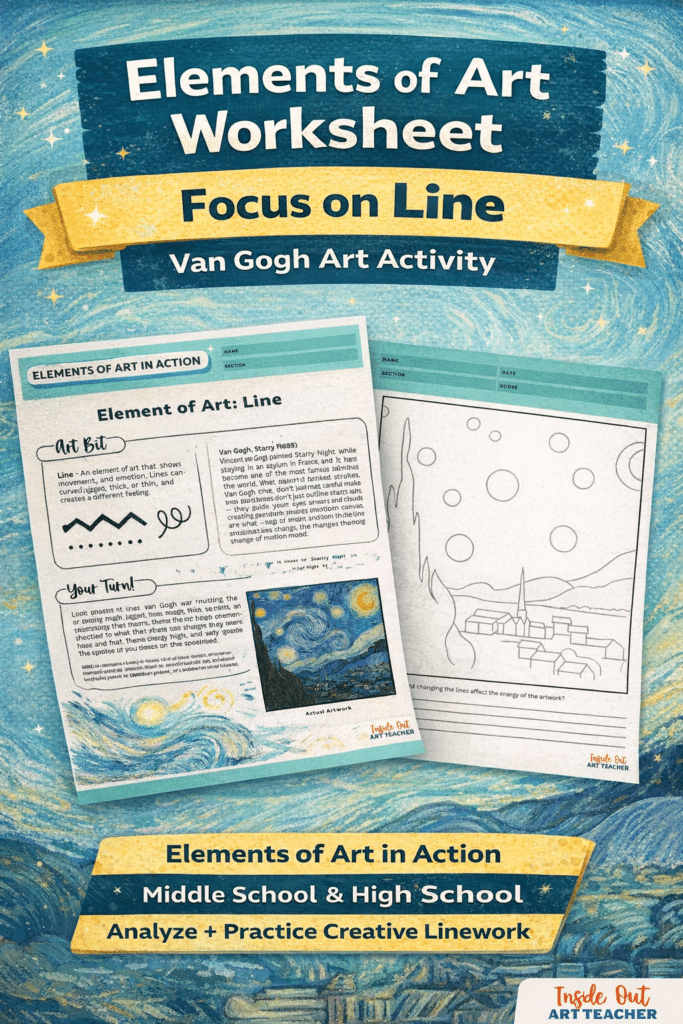
- Elements of Art Worksheets
- Principles of Design Worksheets
Creative Classroom Worksheets That Work Across Subjects
Some worksheets go beyond practicing drawing skills and instead focus on creative thinking, design, and visual problem solving. These types of activities work well in many classrooms because students explore ideas, make design decisions, and respond to visual prompts.
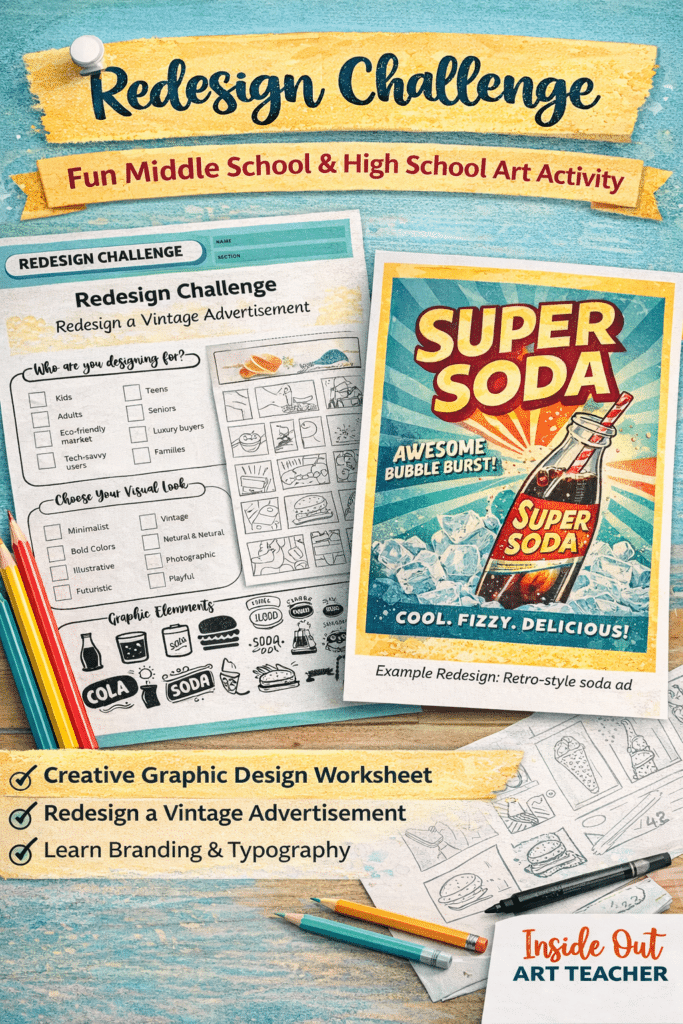
Worksheets that combine art history, design challenges, and the elements and principles of art give students a clear starting point while still allowing them to think creatively. Instead of staring at a blank page, students respond to visual prompts, historical inspiration, or design problems that guide their work.
Because these activities emphasize observation, creativity, and visual communication, they can work not only in the art classroom but also in social studies, language arts, and interdisciplinary classrooms. They are especially useful for substitute teacher days, early finisher activities, or situations where students need an engaging, creative task that requires minimal setup.
If you want to explore this approach further, you can read more in my guide, Start Teaching Design in the Classroom, where I share ways to introduce design thinking and visual culture into everyday classroom activities.
If you enjoy activities that combine creativity with history and design, you might also like these creative art history activities that help students explore different time periods through drawing and visual storytelling.
Art History and Design Worksheets for the Classroom
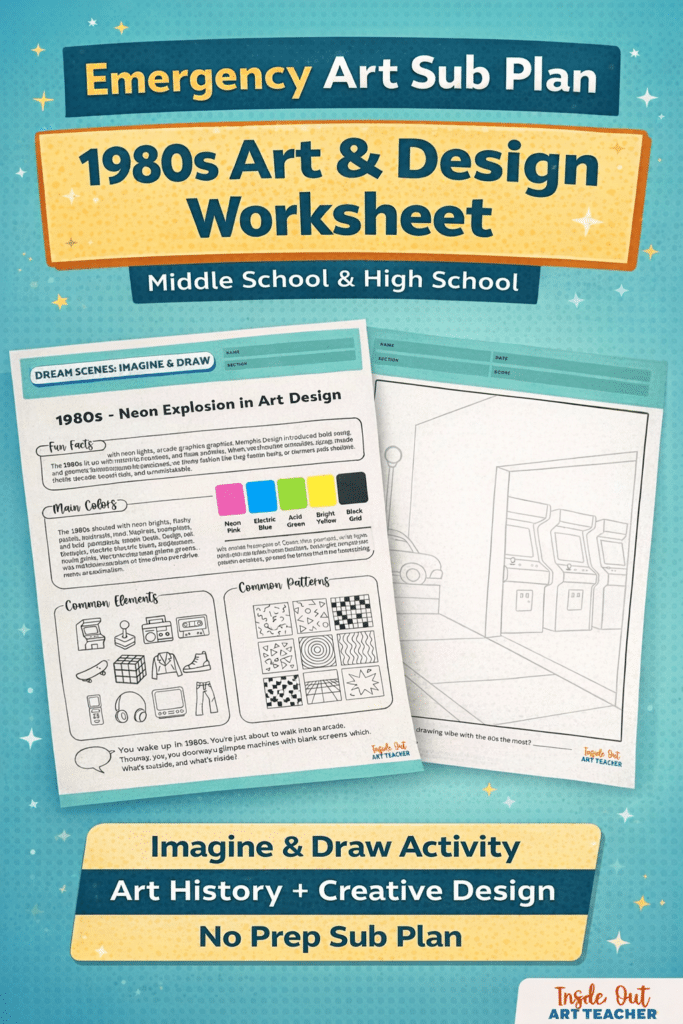
- Decades Art History Drawing Worksheets
- Visual Culture and Design Challenges
- Elements and Principles Design Worksheets
- Creative Design Thinking Worksheets
- Digital Design Challenge Worksheets
Final Thoughts
Having a few reliable art sub plans ready to go can make unexpected absences much less stressful. Worksheets, drawing challenges, and visual thinking activities allow students to stay engaged while still practicing important creative skills.
If you’re building a substitute binder or planning independent classroom activities, these printable worksheets can provide flexible options that work for many different classroom situations.
FAQ: Art Sub Plans
What are good emergency art sub plans?
Simple drawing activities, worksheets, and structured design prompts work well because they allow students to work independently while still practicing important creative skills.
What art lessons can substitute teachers manage easily?
Puzzle-style drawing activities, reflective symmetry worksheets, and structured design challenges are often easiest for substitute teachers to manage because they require minimal demonstration.
What are no-prep art activities for middle school?
Printable worksheets such as grid drawing puzzles, design prompts, and visual thinking activities are popular no-prep options that keep students engaged while reinforcing art concepts.
Can art worksheets work in other subjects?
Yes. Many visual thinking and design worksheets can support learning in social studies, language arts, and interdisciplinary classrooms because they encourage observation, creativity, and visual communication.