

If you’ve ever ended the day feeling more exhausted from managing materials than actually teaching art, you’re not alone.
For years, I thought classroom chaos was just part of being an art teacher. The pencils. The supply traffic jams. The “Can I get up?” every five seconds. I assumed it came with the territory.
It doesn’t.
What changed everything for me wasn’t stricter rules or louder reminders. It was building small classroom systems that protect your peace.
Tiny shifts.
Intentional placement.
Predictable routines.
These aren’t flashy classroom hacks. They’re quiet systems that remove friction before it starts.
The tips below may look simple — but together, they create a classroom environment that runs smoothly, feels calm, and allows you to focus on creativity instead of constant redirection.
These small routines are part of the larger art classroom systems that protect your peace and strengthen classroom management.
Jump to a System
System #1: Pencil & Marker System
System #4: Room Layout for Visibility
System #5: Visible Organization
System #6: End-of-Class Routines
System #7: Student-Owned Artwork
System #8: Padlet Assessment System
Quick Start (Do This This Week)
If you only implement three things from this post, start here:
- Put sharpened pencils + working markers on every table before students enter.
- Create a “student zone” and a “teacher zone” so access is clear (and your stuff stops walking away).
- Keep students seated until the bell — it instantly lowers end-of-class chaos.
Get the art teacher binder + checklist (free)
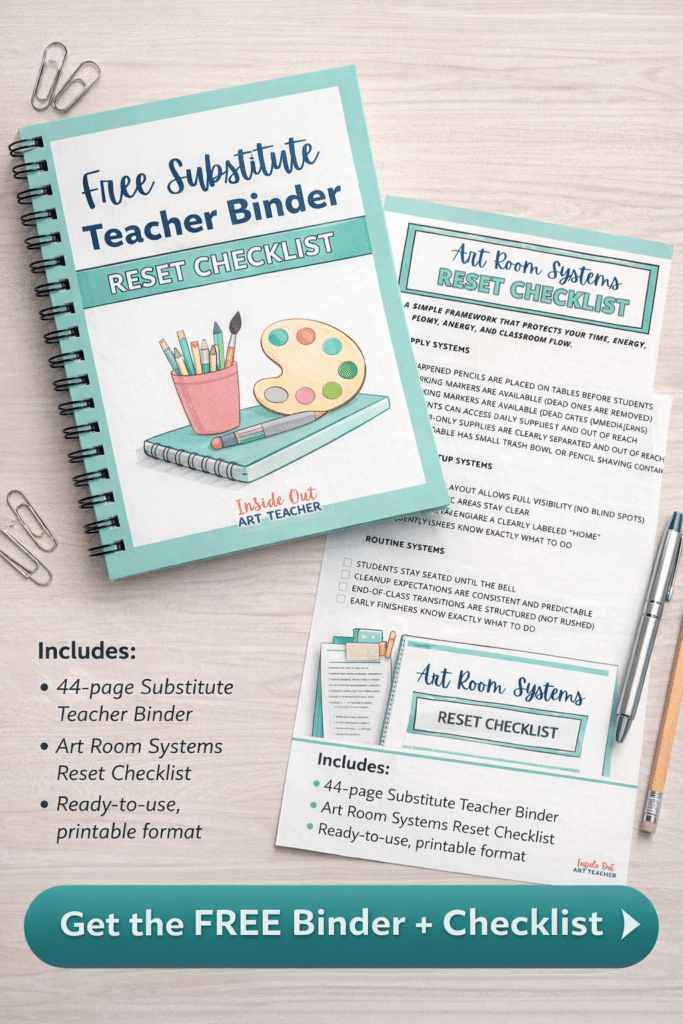
Grab my Free Art Room Systems Reset Checklist and keep your classroom running smoothly all year. Includes: 44-page Sub Binder + Art Room Systems Reset Checklist
Why Small Classroom Systems Matter More Than Big Rules
Art rooms are busy. They’re colorful. They’re creative. They’re not exactly known for being quiet meditation retreats.
For a long time, I thought the chaos just came with the territory.
So I made more rules.
More reminders.
More “please sit down.”
More “wait your turn.”
More “why are we lining up already?”
And guess what? I was exhausted.
The problem with big rules is that they require constant enforcement. You have to be “on” all the time. Watching. Correcting. Redirecting.
That gets old fast.
Systems are different.
Systems don’t yell.
They don’t remind.
They just quietly exist.
When pencils are already on the table, you don’t need to manage pencil traffic.
When supplies are within reach, you don’t need to manage supply scavenger hunts.
When furniture is arranged intentionally, you don’t need to swivel your head like an owl all period.
Rules demand energy.
Systems conserve it.
And in a job that already asks a lot of you, conserving energy isn’t a luxury — it’s survival.
You’re not trying to run a silent art museum.
You’re just trying to run a room that doesn’t drain you by 10:30 a.m.
That’s the shift.
System #1: The Pencil & Marker System That Prevents 20 Interruptions Per Class
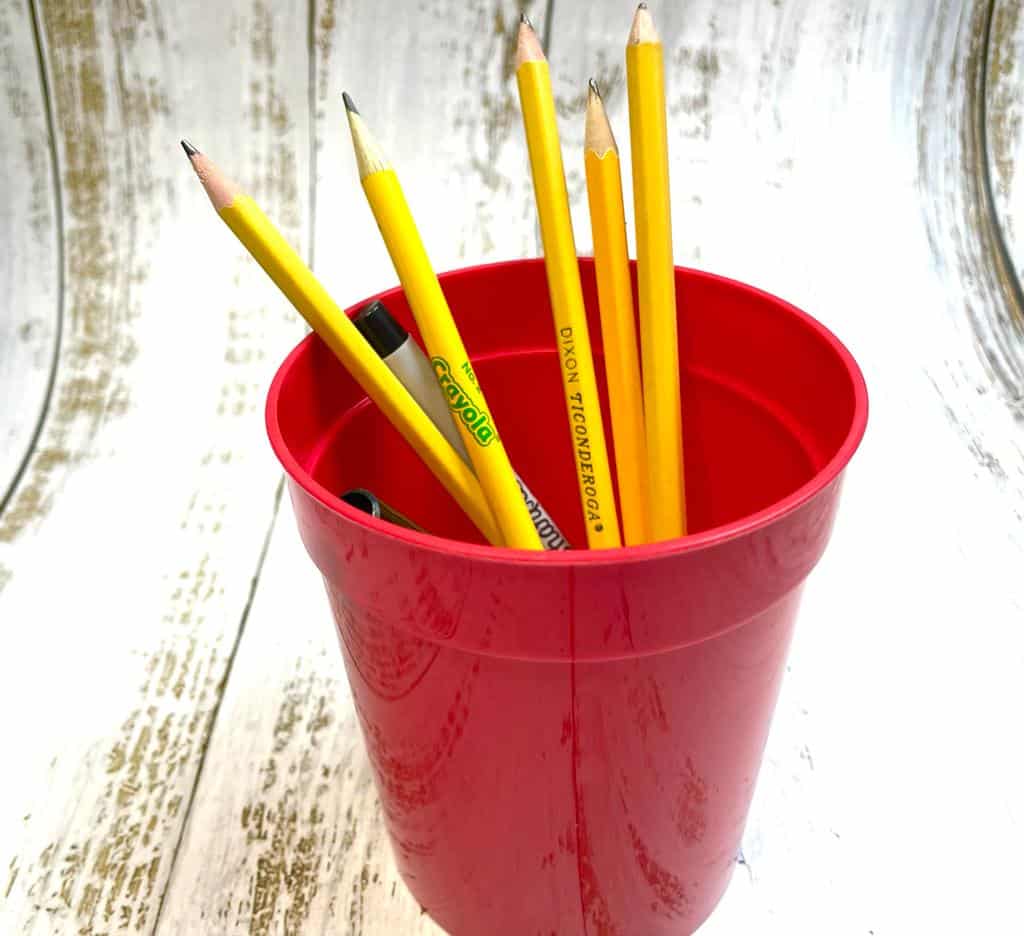
You wouldn’t think pencils and markers could shape the energy of an art room — but they absolutely can.
For years, I underestimated how much disruption came from one small thing: students getting up to sharpen pencils, searching for replacements, quietly recapping dead markers, or passing along half-working supplies. Each interruption felt minor. Collectively? It was constant friction.
The fix wasn’t stricter rules.
It was a system.
Every table has pencils.
They are sharpened before class.
Students know exactly when sharpening happens.
When we’re using fine-point markers, those live in the table cups too. Everything they need is already within reach.
When tools are predictable, students start working immediately. There’s no traffic around the sharpener. No grinding noise mid-demo. No supply scavenger hunts. Predictability creates calm.
But this system doesn’t just support students.
It protects me.
I keep a large basket of sharpened pencils in a spot I can easily access — and yes, it’s a pretty basket because I enjoy looking at it. That matters more than we admit. When your space feels pleasant and functional, you move differently in it.
My black liners and markers are stored in a clearly labeled bin, separated by thickness and ready to grab. I always keep replacements stocked and within reach.
Years ago, I used to store everything in the supply room. On paper, that sounded organized. In reality, it meant I was constantly running back and forth during class — digging through drawers, searching for replacements, feeling annoyed that I couldn’t just grab what I needed.
That low-level aggravation adds up.
Now, I design my room so I never have to leave the flow of teaching to hunt for supplies. If a marker dies, I replace it immediately. If pencils run low, I refill from my basket.
No scrambling. No resentment. No “why didn’t I think of this sooner?”
And then there’s the culture piece.
As I circulate, I carry that basket of freshly sharpened pencils with me. If I see a student working with a tiny pencil stub or one missing an eraser, I’ll smile and say, “Why are you working with that? You deserve a new one.”
It’s light. It’s playful. But it matters.
Years ago, I required students to bring their own pencils. If one broke, that was “their problem.” Not surprisingly, materials were treated that way too — disposable and careless.
When I shifted the approach, something subtle changed. Students began treating the supplies with more respect. Not because I demanded it, but because the gesture communicated care and trust.
I use the same philosophy with markers.
If a marker is dead, I tell students to throw it away.
Not recap it.
Not quietly put it back.
Not pass the frustration to the next person.
There is nothing more annoying than grabbing a marker mid-flow and realizing it’s dry. I would rather replace a marker than replace momentum.
When students see that I’m paying attention and prioritizing good tools, they rise to it. They let me know when supplies are low. They don’t abuse the system.
If I care, they care.
Now, I know some teachers are thinking: “That sounds great, but I don’t have a huge budget.”
This isn’t about having endless supplies. It’s about priorities.
Pencils and markers are non-negotiables in my room because they directly impact focus and flow. I’ll cut back on decorative extras before I cut back on the tools students use every single day.
If you’re working with a tight budget, I share exactly how I plan and order strategically here:
👉 Ordering Art Supplies on a Budget
The goal isn’t excess.
It’s eliminating friction — for students and for you.
When the tools are ready, accessible, and reliable, the room runs smoother. And smoother classrooms protect your time, your energy, and your peace
Why it matters: This removes friction before it starts, so students stay in the flow — and you don’t spend the period managing tiny interruptions.
System #2: Clear Access Zones (What Students Can Touch — and What They Can’t)
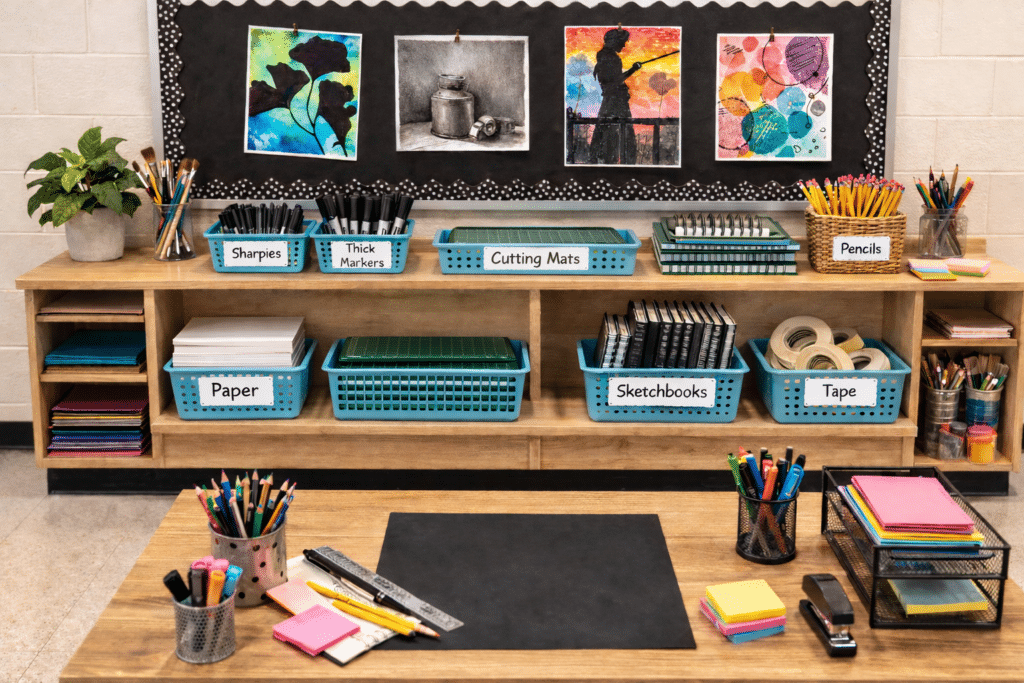
An organized art room isn’t just about having supplies.
It’s about designing access.
There are materials students use every day — pencils, markers, shared tools — and those are placed within reach on purpose.
But there’s another category: teacher supplies.
Replacement markers. Extra tools. Specialty items. Things I don’t want casually grabbed or slowly disappearing.
Those live behind my desk.
My desk is intentionally placed near the supply room, creating a natural boundary. Students don’t casually walk behind it. The shelving behind my desk holds everything I need but don’t want freely accessed.
In some cases, items are locked in drawers overnight. Not because I don’t trust students — but because systems work best when access is clear.
Students know:
- What’s theirs to use
- What stays put
- What they need to ask for
When boundaries are physical and obvious, you don’t have to constantly police them.
And that protects your energy.
Years ago, I didn’t think carefully about this. Supplies were technically “organized,” but I was constantly guarding them, worrying about them, or running to retrieve them.
Now the layout does the work for me.
That’s the difference between managing behavior and designing the room.
Why it matters: This removes friction before it starts, so students stay in the flow — and you don’t spend the period managing tiny interruptions.
System #3: Protecting Creative Flow with Smart Table Setup
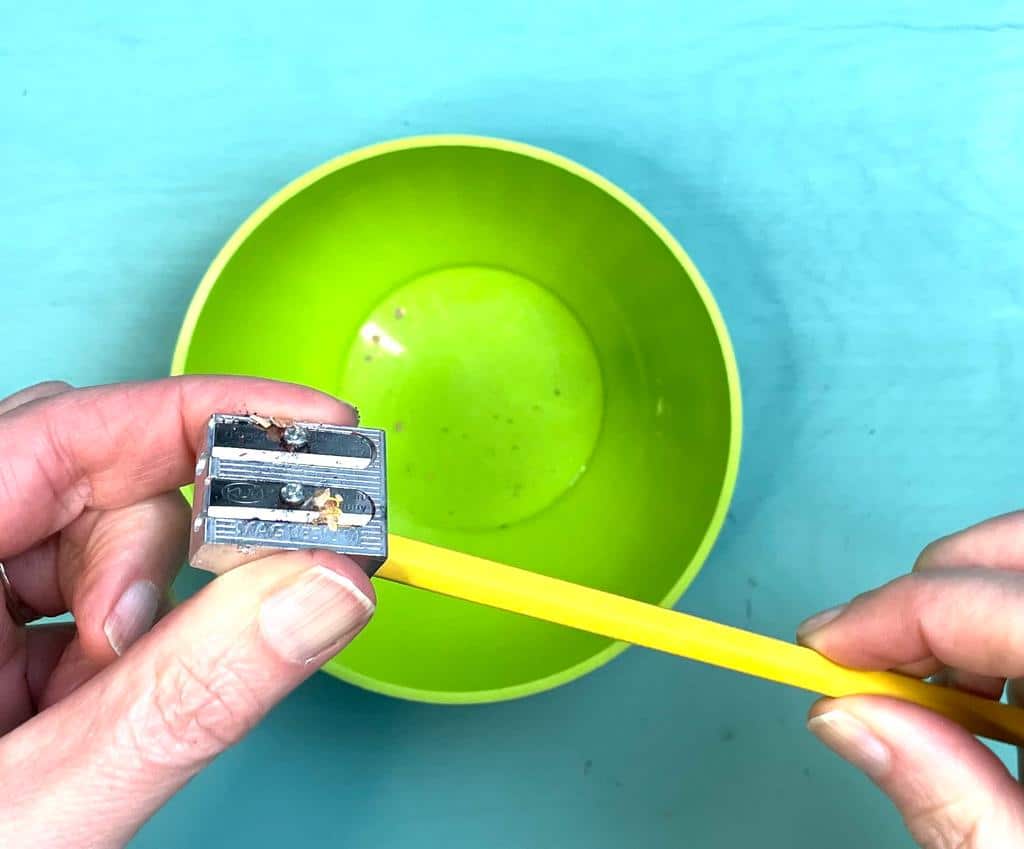
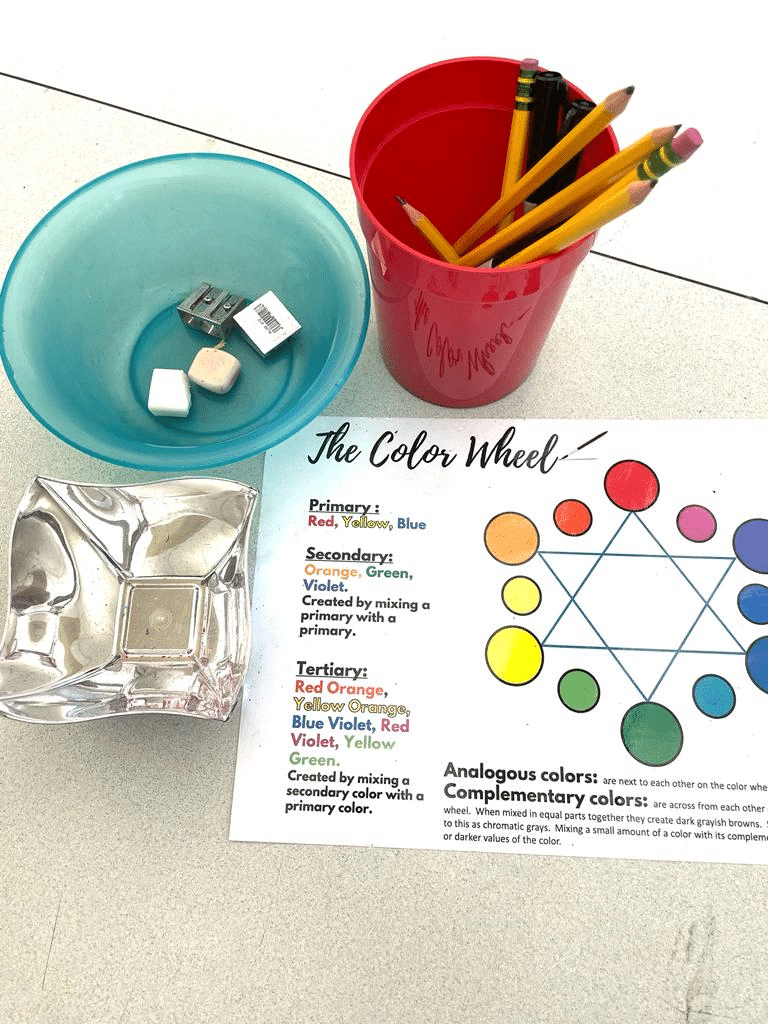
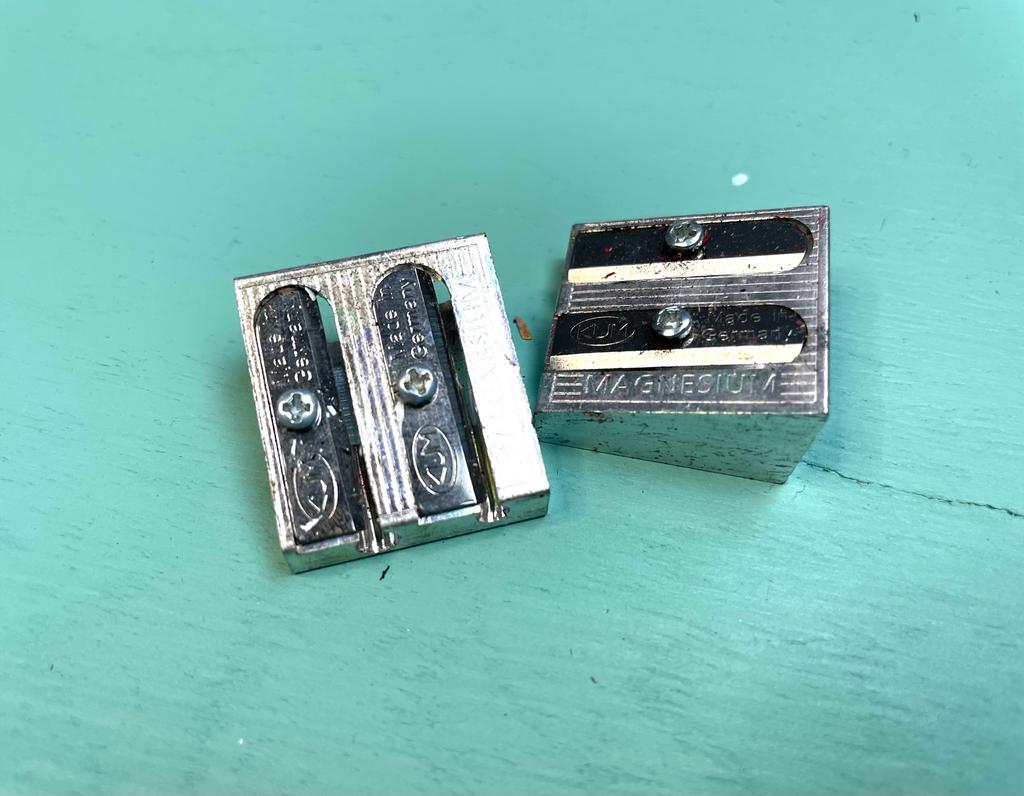
There’s another tiny adjustment that makes a big difference: a bowl in the center of each table for pencil shavings.
It sounds almost too simple.
But without it? Students get up. They wander to the trash. They bump into each other. They lose focus. You redirect. The energy shifts.
With a shaving bowl at the table, they sharpen, tap, and continue working — without leaving their seats.
That’s not about neatness.
That’s about flow.
Protecting creative flow is one of the most underrated classroom management strategies in an art room. When students are in the zone, even small interruptions can pull them out of it.
So I remove as many of those interruptions as possible.
And sometimes that means I do the small things for them.
As I circulate, I’ll empty the shaving bowls myself. I’ll swap out dull pencils. I’ll quietly reset the table while they continue working.
They don’t have to stop creating to manage debris.
That might sound small, but it sends a message:
Your work matters. Stay in it.
When students see you maintaining the environment around them, they feel supported. And when they feel supported, they settle.
It’s similar to cooking in a well-organized kitchen. When everything is within arm’s reach, you move confidently. When you have to leave the stove to search for an ingredient — or clean up mid-recipe — the rhythm breaks.
Art class is no different.
By designing your tables intentionally and handling the minor disruptions quietly, you preserve momentum. And preserved momentum feels calm.
Calm classrooms aren’t created by constant reminders.
They’re created by removing friction before it starts — and protecting the space where creativity happens.
Why it matters: This removes friction before it starts, so students stay in the flow — and you don’t spend the period managing tiny interruptions.
System #4: Designing the Room for Visibility and Flow

The way you arrange your furniture matters more than most teachers realize.
I arrange my tables in a U-shape so I can walk through the center and see every student’s face while they work. No one has their back to me. No hidden corners. No blind spots.
That single decision changed everything.
I’m not constantly craning my neck. I’m not surprised by off-task behavior. I can circulate naturally, make eye contact, and check in without hovering.
When students know you can see them — and they can see you — the energy shifts. The room feels open, connected, and calm.
Classroom management becomes quieter because the layout does part of the work for you.
Furniture arrangement isn’t just about fitting tables into a space.
It’s about designing visibility, access, and movement so you don’t spend your day reacting.
Why it matters: This removes friction before it starts, so students stay in the flow — and you don’t spend the period managing tiny interruptions.
System #5: Visible Organization That Teaches Responsibility
An art room can unravel quickly without clear organization.
But organization isn’t just about neatness.
It’s about clarity.
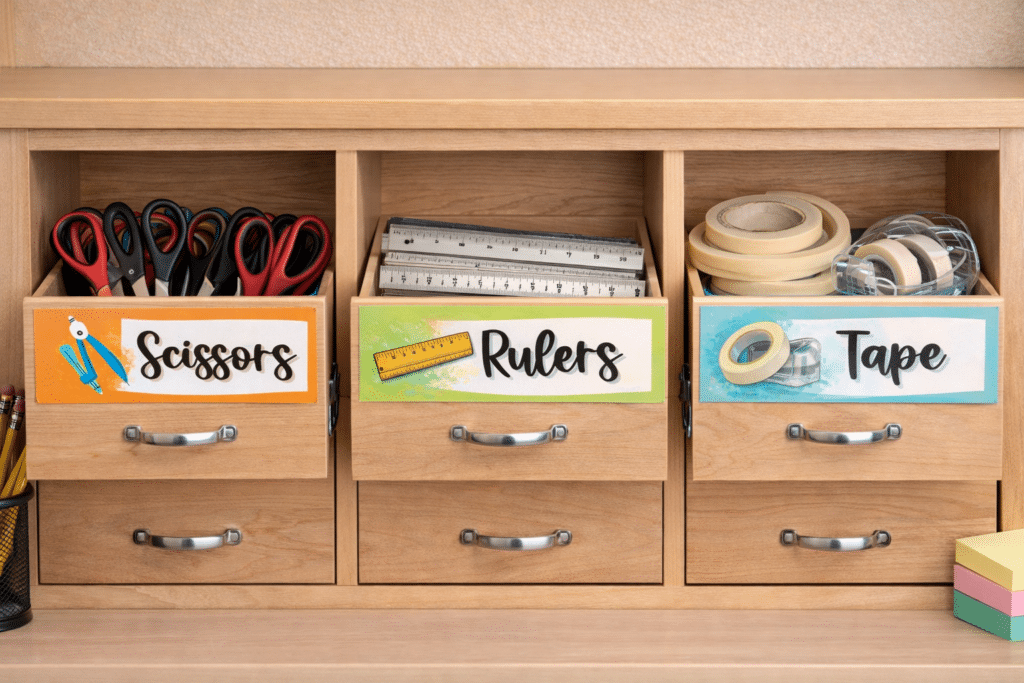
My drawers are clearly labeled. Students know exactly where to find scissors, rulers, tape, and everyday tools without asking. They don’t need permission for basic materials because the system is obvious.
That independence eliminates dozens of small interruptions throughout the day.
For shared materials like colored markers and colored pencils, I keep them organized on a central table — arranged intentionally and, yes, beautifully.
Markers are grouped by color. Pencils are sorted. Everything has a place.
It’s functional — but it’s also visual.
The organized marker display sits like a centerpiece within the U-shaped layout of the room. It’s accessible, visible, and structured. When students approach it, they immediately understand the expectation: take what you need, return it correctly.
And I explain why it matters.
I’ll say, “Imagine coming in tomorrow and not being able to find the exact color you need because someone put it in the wrong spot. That’s frustrating, right?”
They get it.
And when I find a green marker living with the red markers, I’ll make a dramatic scene — playfully. “Who is the wild artist who started a marker rebellion over here?”
They laugh. I laugh. The message lands.
Because here’s the truth: if I care about the system, they care about the system.
When materials are organized clearly and beautifully, students are more likely to maintain that order. It communicates that the room is intentional — not chaotic — and that their environment matters.
Clear, consistent labeling is what makes the system work. I use simple, high-contrast supply labels so students instantly know where materials belong — no reminders needed.
Organization, when done visibly and consistently, becomes part of classroom culture.
And culture reduces chaos before it starts.
Why it matters: This removes friction before it starts, so students stay in the flow — and you don’t spend the period managing tiny interruptions.
System #6: Structured End-of-Class Routines

The last five minutes of class can either feel calm and controlled — or chaotic and rushed.
Early in my career, I used to let students line up as soon as they finished cleaning. That’s when the noise rose. The shuffling started. The energy shifted from focused to frantic.
Now, students stay seated until the bell rings.
No line forming.
No crowding the door.
No early dismissal energy taking over the room.
Those final minutes are intentional.
I use them to give closing instructions, reinforce expectations, answer questions, or simply let the room settle before the transition. It keeps the tone steady right up until the bell.
When students aren’t competing to be first in line, the exit feels smoother. And smoother exits protect your energy just as much as smooth beginnings.
Structure at the end of class is just as important as structure at the start.
Why it matters: This removes friction before it starts, so students stay in the flow — and you don’t spend the period managing tiny interruptions.
System #7: Student-Owned Artwork (No Portfolio Traffic Jams)

This one changed my classroom more than I expected.
I used to keep all student work in the room.
Portfolios. Drawers. Stacks. Hanging files.
On paper, it felt organized.
In reality, it created chaos.
The beginning of class turned into a scavenger hunt. Students digging through drawers. Flipping through portfolios. “I can’t find mine.” “Wait, where did it go?” “Did someone move it?”
And then the sentence that makes every art teacher’s eye twitch:
“My project is lost.”
That phrase used to echo through my room daily. And nine times out of ten? It wasn’t lost. It just wasn’t being looked for very hard.
But even when it wasn’t truly lost, it cost time. It cost focus. It cost energy.
And it created an easy excuse.
If artwork stayed in the room, there was always the possibility that “someone took it.” Whether that was true or not didn’t matter — it opened the door to blame, distraction, and ten minutes of unnecessary searching.
So I changed the system.
Now, especially in Art 1, students work smaller and take their artwork home in a folder every day. It lives in their backpack. It comes back next class.
They walk in.
They sit down.
They take it out.
They begin.
No portfolio line.
No drawer digging.
No beginning-of-class bottleneck.
And surprisingly? They don’t lose it.
When the responsibility shifts to them, they rise to it.
And here’s the quiet bonus: the excuse disappears.
If it’s always their responsibility, they look a little harder before declaring it gone. They can’t immediately blame the drawer, the shelf, or the mystery art thief.
And I no longer spend class time playing detective.
The only time I keep work in the room now is for larger pieces that realistically can’t travel. Otherwise, ownership stays with the student.
It eliminates friction at the beginning of class.
It eliminates friction at the end of class.
And it eliminates one of the most draining refrains in an art room:
“My project is lost.”
I don’t hear it anymore.
And that alone makes the system worth it.
System #8: Quick Assessment with Padlet (Grading Without the Headache)
Grading art used to feel like a separate job — one that never ended.
I’d try Google Classroom. I’d open file after file. I’d tap and scroll and flip back and forth between screens. It took forever, and I never felt like I had a real sense of where my students were.
Then I started using Padlet in a much simpler way.
Here’s the system:
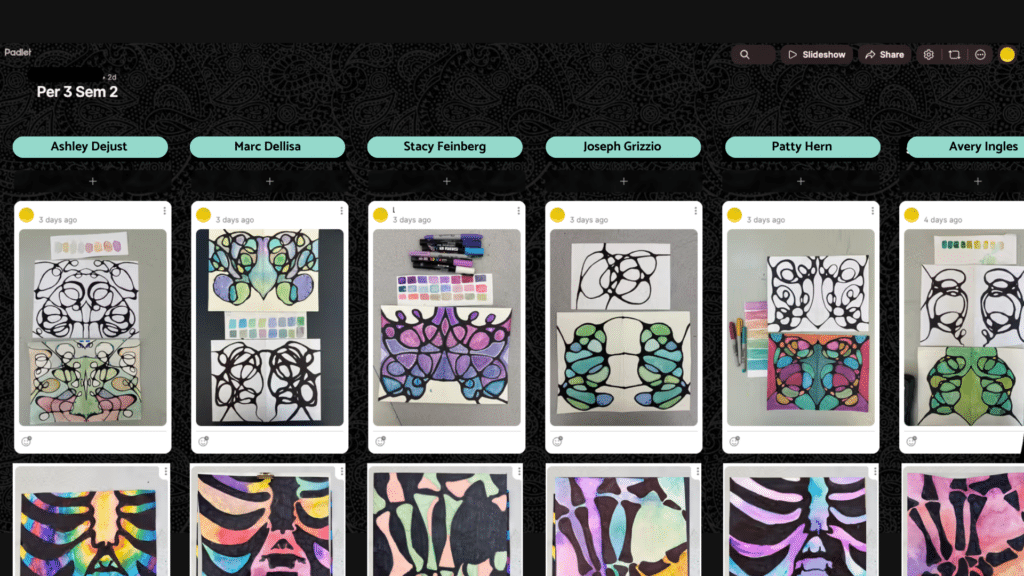
As students finish projects, I walk the room with my phone and take a photo of their work. I drop it directly into their column in our class Padlet — alphabetical and organized.
That tiny shift changes everything:
- I see every student’s work in one place — no digging, no searching.
- I can grade or make notes quickly.
- I can show parents or administrators instantly.
- I can share success with other teachers (because who doesn’t love showing off great student art?).
- I upload Padlet to Google Classroom and they can see what they have done or what they are missing.
No extra uploading for kids. No lost files. No thankless scrolling through screens.
Bonus: this becomes a natural moment to give mini-feedback — a quick, casual “Hey, this is working!” or “Try adding more ___ before you call it done.”
It feels informal, but it’s meaningful. And it’s fast.
Padlet lines everything up alphabetically so I can scroll through and assess a class in minutes instead of hours.
If you’d like a full walkthrough of how I use Padlet to motivate students and track progress, I go into way more detail in this post:
👉 Using Padlet to Boost Motivation & Track Progress
But the system here is simple:
Let the tech work for you, not against you.
Classroom Systems Checklist (Screenshot This)
Use this as a quick reset list when your room starts feeling chaotic again:
- Pencils are sharpened and already on tables
- Working markers are available (dead ones get tossed immediately)
- Students can access daily supplies without asking
- Teacher-only supplies are clearly behind a boundary zone
- Each table has a shaving bowl / mini trash option
- Furniture layout allows full visibility (no blind spots)
- Shared supplies have a labeled “home” students can return to
- Students stay seated until the bell
- Student work storage has zero “traffic jam” moments
- Quick photo workflow exists for grading/documentation (Padlet or similar)
The Classroom Systems That Protect Your Peace
None of these systems are complicated.
A pencil basket.
A shaving bowl.
Clear supply zones.
Visible organization.
Intentional furniture placement.
A calm end-of-class routine.
Individually, they seem small.
Together, they change everything.
These aren’t about copying my room exactly. Your layout, your students, your budget, and your teaching style are different from mine.
What matters is not my system.
What matters is that you build one.
Thoughtful, repeatable structures that reduce friction in your specific classroom. Systems that make sense for your space. Systems that protect your energy instead of draining it.
When your systems are clear, your energy is protected.
And when your energy is protected, you can actually enjoy teaching again.
Because chaos isn’t inevitable in an art room.
But calm doesn’t happen by design — unless you design it.
Related Art Teacher Resources
Not sure what to tackle next? Start with one of these (they pair perfectly with the systems above):
Using Padlet to Simplify Grading and Track Progress in the Art Room
High School Art Lessons, Projects, and Tips
Simple Mindful Art Lesson Inspired by Neurographic Art
Neurographic Art Easy Doodle Drawing Project
Editable Art Room Supply Labels
Be the first to know about discounts, freebies, and new resources!
Find me on my blog – Inside Out Art Teacher, YouTube, or Instagram.


