
Why Beginners Struggle With Drawing Accuracy
Many beginner artists rush straight into drawing tiny details before they understand the basic structure of an image. When students focus on eyelashes, textures, or small decorations first, their drawings often end up distorted or out of proportion.
One of the most important drawing habits students can learn is to start with large shapes and placement before adding details.
Teaching this process helps students slow down, observe more carefully, and build stronger drawing skills over time.
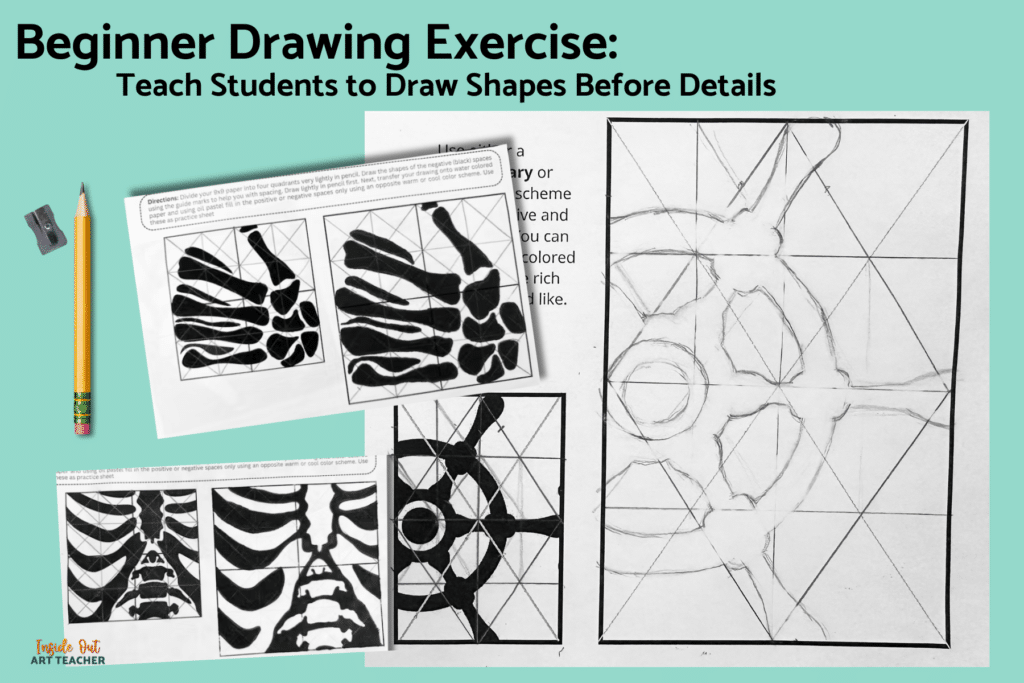
In this beginner drawing exercise, I use a simple drawing worksheet to guide students through that process step-by-step so they can practice focusing on shape placement, proportion, and structure before details.
This exercise fits easily into both middle school art lessons and high school art lessons because it helps students build foundational observation and drawing skills.
Watch the Lesson: Teaching Students to Draw Shapes First
This beginner drawing exercise helps students slow down and focus on shape placement, proportion, and observation before adding details.

In this video, I demonstrate how students can use a simple worksheet to practice identifying and sketching the large shapes in a drawing and finding correct placement and proportion before moving on to smaller details.
This step-by-step approach helps students build stronger observation skills and improves drawing accuracy.
The Most Common Beginner Drawing Mistake
One of the most common mistakes beginner artists make is starting with details too soon.
Students often focus on drawing small parts of an image—like eyes, patterns, or decorations—without considering the drawing’s overall structure.
When this happens, proportions can quickly become distorted because the basic shapes and placement were never established first.
Teaching students to begin with large shapes and overall placement helps them build a stronger foundation before adding details.
This simple shift in process can dramatically improve drawing accuracy and confidence.
The Mindset Behind Teaching Drawing
When teaching beginner drawing, one of the biggest challenges isn’t the technique — it’s helping students change how they look at images.
Our brains naturally simplify what we see and focus on recognizable details first. Most students have spent years drawing from memory, so their instinct is to jump straight to things like eyes, textures, or patterns instead of paying attention to placement and scale.
Because of this, I normalize the behavior from the beginning. I tell students they will probably hear me repeating the phrase “shapes before details” many times during the activity.
Instead of treating mistakes as failures, we celebrate when students catch them. When a student notices they placed something incorrectly or started adding details too early, that’s actually a win—it means they slowed down and observed more carefully.
Over time, students begin to retrain their drawing habits. They become less frustrated by mistakes and more confident in their ability to correct them. This shift in mindset helps students develop stronger observation skills and reduces the frustration that often comes from drawings that feel “off.”
A Simple 3-Step Drawing Process for Beginners
Once students understand the mindset behind the activity, I guide them through a simple three-step process.
1. Identify the large shapes and find placement in relation to the grid first
Students begin by observing where the main shapes intersect each section of the grid. This worksheet uses a simple X-grid method, which divides each square into triangles to help students more easily identify where lines and shapes appear.
At this stage, I remind students that we are not drawing details yet. Our goal is simply to find where the big shapes belong. Some students will naturally start adding details anyway, and that’s completely normal. A gentle reminder to return to the large shapes usually helps it click.
2. Check placement and proportions
Once the main shapes are lightly sketched, students pause to check how the shapes relate to one another. This step helps them adjust placement and proportions before moving forward, and it is often the most overlooked part of the drawing process.
Taking a moment here to check their work prevents many of the mistakes that lead to frustration later.
3. Add smaller details last
Only after the structure of the drawing is correct do students begin adding smaller details, textures, and refinements.
By building the drawing in this order, students gradually develop stronger observation habits and learn to trust the process.
Using Worksheets to Teach Foundational Drawing Skills
Worksheets can be a helpful tool when introducing new drawing skills because they provide a structured way for students to practice observation and placement.
In this lesson, the worksheet helps students focus on identifying the basic shapes that make up the image before moving on to details.
Because the image is already organized into sections, students can concentrate on:
• observing shapes
• placing elements accurately
• checking proportions
• building confidence with drawing
Rather than being used as busywork, worksheets like this can support the development of foundational drawing habits that students can apply to many different types of artwork.
Step-by-Step Beginner Drawing Exercise
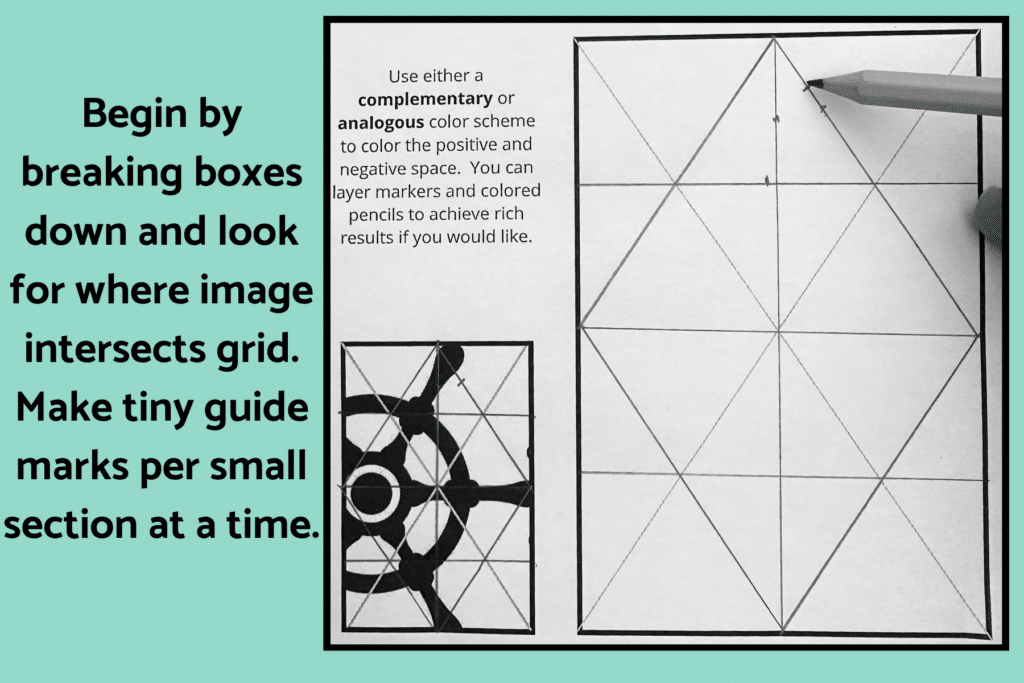

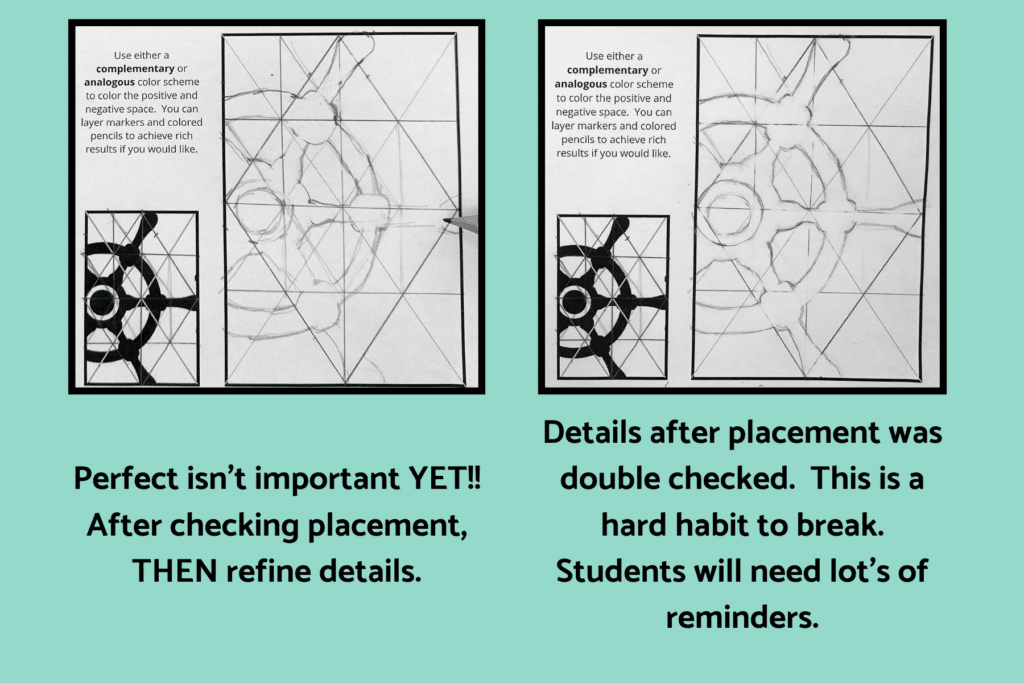
Learning to draw can feel challenging because our natural tendency is to seek perfection right away. We want every line to be flawless, every shape to be just right, and every detail to be spot-on. But guess what? That’s not how drawing works, especially when you’re just getting started. Quick art projects help students avoid feeling overwhelmed.
To overcome this, we need to shift our focus. Instead of obsessing over perfection, let’s concentrate on placement. Think of drawing as putting together a puzzle; figure out where each piece belongs in the overall picture before refining details. Working with small-scale, quick art projects or art worksheets like I’m using here is a great place to start while students are just learning because the simplicity allows them to focus on JUST THE PLACEMENT to start.
This change in mindset, while initially unfamiliar, is crucial for becoming a skilled artist. So, ditch the idea that everything has to be perfect instantly and embrace the importance of getting the placement right. This shift will not only make the learning process more enjoyable but also set the foundation for artistic success.
How the X-Grid Helps Beginner Artists
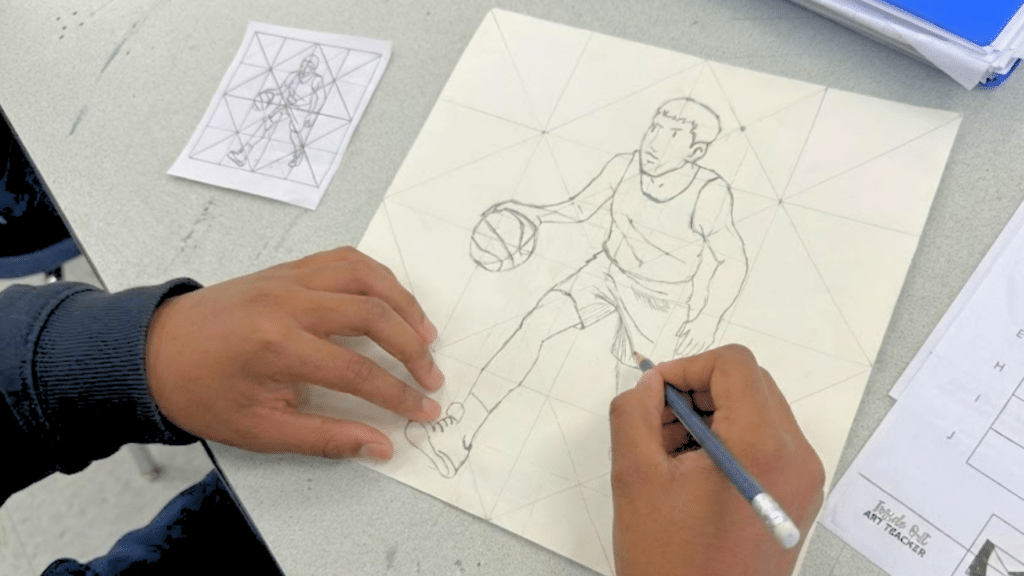
The grid drawing method helps beginners because it breaks a complex image into smaller, manageable sections. Instead of trying to copy the entire picture at once, students focus on where shapes intersect each part of the grid.
This worksheet uses an X-grid, which adds diagonal lines inside each square. Those extra lines give students more reference points for angles and placement, which helps reduce common measuring mistakes. Students don’t have to guess where something goes or constantly count squares—they can see it.
For teachers, this means less time walking around correcting measuring errors and more time helping students develop real drawing skills.
As students gain confidence, they gradually rely on the grid less and less. The goal isn’t for students to depend on the grid forever—it’s for the process to become autopilot. Over time they begin naturally identifying large shapes, checking placement, and adding details last.
Those habits become the foundation for stronger drawing skills long after the grid disappears.
Because the grid provides clear reference points, students make fewer measuring mistakes, which allows teachers to spend less time correcting placement and more time helping students develop real drawing skills.
Practice This Beginner Drawing Exercise With Students
If you’d like to try this drawing exercise with your own students, these beginner drawing worksheets guide students through the same shape-first drawing process demonstrated in the lesson.
These worksheets work well for:
• beginner drawing practice
• teaching observation skills
• building drawing confidence
• reinforcing accurate proportions
👉 You can find the worksheet set here: Negative Space and Color Theory Beginner Drawing Worksheets
Final Thoughts
Teaching students to focus on shapes before details is one of the most important drawing habits they can learn. Activities like this help students slow down, observe more carefully, and build the foundation for more advanced drawing skills.
Once students develop the habit of identifying large shapes and checking placement first, they become much more confident in their drawings and far less frustrated by mistakes.
More Drawing Worksheets for Beginners
You might also like these drawing worksheets:
• Animal Drawing with X-Grid Worksheets
• Summer Theme X-Grid Drawing Worksheets
• Sports Theme X-Grid Drawing Worksheets
More Drawing Lessons for Beginners



If you’re teaching beginning drawing skills, these lessons can help students develop stronger observation and drawing habits.
• Negative Space Drawing Lesson
• Beginner Grid Drawing Project
• Beginner Drawing Unit Plan for Art 1
These types of exercises encourage students to focus on shape relationships, placement, and proportion before adding details.
Frequently Asked Questions
Can this worksheet be used for a substitute lesson?
This worksheet can work for a substitute lesson if students have already learned the drawing process. The goal of this activity is to practice identifying large shapes first, checking placement, and adding details last. If students are unfamiliar with this process, they may jump straight to details and miss the purpose of the exercise.
For that reason, I usually introduce the activity during a regular class lesson where I can model the process and remind students to focus on shapes before details. Once students understand the strategy, the worksheet can work well as an independent activity, early finisher option, or substitute lesson.
Why do students want to draw the details first?
Most beginner artists naturally focus on details because our brains tend to recognize familiar parts of an image before noticing overall structure. Students often see things like eyes, textures, or patterns first and try to draw those right away.
Teaching students to look for large shapes and placement first helps them build stronger observation skills and create drawings that are more accurate.
Why use a grid for beginner drawing?
The grid drawing method helps beginners break a complex image into smaller sections. Instead of copying the entire picture at once, students focus on one area at a time and observe where shapes intersect the grid.
The X-grid used in this worksheet adds diagonal lines, which give students additional reference points and help reduce measuring mistakes.
Be the first to know about discounts, freebies, and new resources!
Find me on my blog – Inside Out Art Teacher, YouTube, or Instagram.