
Let’s be honest: art history can be a tough sell in the classroom.
You sit down with the best intentions. You queue up the slideshow. You start talking about brushstrokes or symbolism or the invention of oil paint. And somewhere around slide six, you catch a student making direct eye contact with the clock like they’re begging for it to move faster.
Sound familiar?
You’re not alone.
Art history is full of incredible stories and powerful ideas, but without the right approach, it can come off feeling stiff, outdated, or like something your students have to “get through.”
But here’s the good news:
Art history doesn’t have to feel like a lecture.
It can feel like a launchpad for creativity.
In this post, I’m going to share exactly how I’ve made art history feel fresh, fun, and meaningful for my middle and high schoolers. You’ll get real, practical ideas to use in your classroom tomorrow, plus a printable resource that makes it all easier. So whether you’re teaching remotely, wrangling a room of 30, or prepping sub plans at 10 PM, I’ve got you covered.
Why Teaching Art History Still Matters

In a world full of content flying at our students every second, visual literacy matters more than ever.
Art history teaches students how to interpret images, symbols, and cultural messages. It helps them understand why people create, how art reflects identity and society, and how creativity connects across time and space.
Here’s what students actually gain from learning art history:
- Stronger critical thinking skills by analyzing visuals, not just text
- Greater cultural awareness through exposure to different time periods, styles, and worldviews
- Inspiration for their own art by seeing how artists take risks, break rules, and use their voices
- Confidence in their ideas when they realize they can respond to great works of art with their own perspective
In short, art history gives students a deeper sense of connection: to themselves, to each other, and to the bigger human story.
But only if we teach it in a way that connects with them.
Why Art History Can Feel Like a Struggle

Let’s just name the things that make art history hard to teach. It’s not because the content isn’t amazing. It’s because:
- Students assume it’s all memorization and “old stuff”
- Traditional materials are lecture-heavy or textbook-based
- There’s never enough prep time for creative planning
- It’s tough to make the content feel relevant and personal
- Some students get intimidated by “famous” artwork and think, “Well, I could never do that”
I get it. I’ve faced all of these in my own classroom. That’s why I started shifting how I approach it—and the difference was night and day.
How to Make Art History Actually Fun (Yes, Even for 8th Period)

If you want your students to lean in instead of tune out, the key is to make art history active, personal, and a little unexpected.
Here are four strategies that have completely changed how my students respond to famous artworks:
1. Start with Storytelling
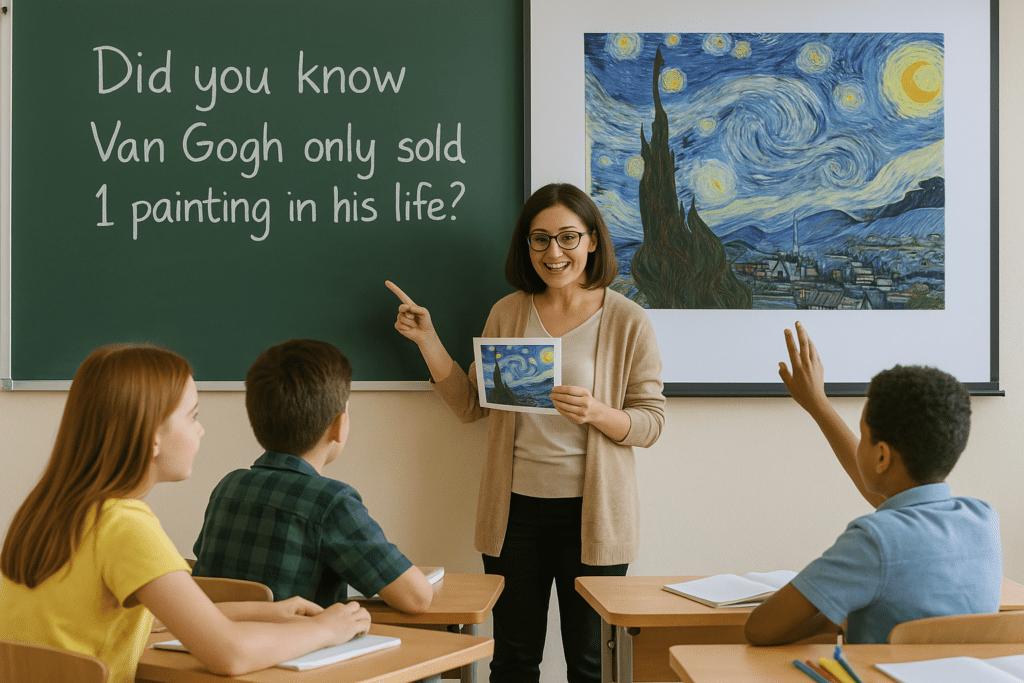
Skip the dry bios. Start with the weird, the wild, the why-didn’t-I-know-this stuff.
Did you know Van Gogh only sold one painting while he was alive? That he painted Starry Night from inside a mental hospital, looking out through bars on the window?
Or that Da Vinci wrote thousands of pages of notes, backward, in mirror writing?
Art becomes human when you tell the stories behind it. Students connect with the artist as a person, not just a name on a timeline.
Tip: Try opening each lesson with a “Did You Know?” moment. Keep it short and memorable. You’ll be amazed how quickly students start asking questions.
2. Bring the Art Into Their World
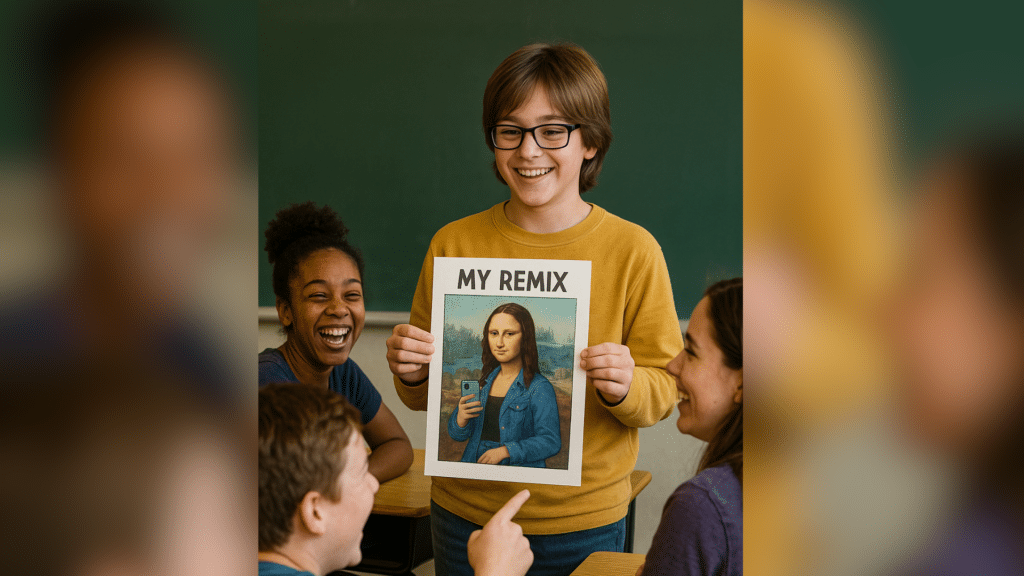
Art history doesn’t exist in a vacuum. The Mona Lisa might be hundreds of years old, but that mysterious smile? That’s still relatable. So is drama. So is fashion. So is heartbreak, joy, boredom, rebellion…all the stuff art is about.
Ask your students:
- What would The Scream look like if it was about school stress in 2025?
- If the Mona Lisa had Instagram, what would her bio say?
- Could American Gothic be a selfie? A yearbook photo?
You’ll get answers that are hilarious, insightful, and sometimes deeply moving. And best of all, students start to see the artwork instead of just skimming past it.
3. Let Them Reimagine the Masterpiece

This is my absolute favorite way to teach art history.
Don’t just look at the art. Let students respond to it creatively.
Instead of assigning a worksheet that asks for facts and dates, try a prompt that says:
“Recreate this masterpiece, but make it your own.
Set it in your neighborhood.
Change the characters.
Put it in a different time period.
Turn it into a cartoon, a comic book, or a TikTok scene.”
Suddenly, you’ve transformed art history from passive to personal. From memorization to creation.
This works especially well for visual learners, hands-on learners, and students who might not feel “good at art,” but have amazing ideas. Which brings me to the final piece…
4. Add a Simple Reflection

Once students finish their reimagined artwork, invite them to write or talk about it. Nothing long. Just a few sentences to answer:
- Why did you make the changes you made?
- What connection did you feel to the original artwork?
- How do you think the artist would react to your version?
Even students who aren’t confident artists can shine here. They’re practicing analysis, empathy, and creative thinking. And you’re getting insight into what really clicked for them.
Want a Ready-to-Go Resource That Does All This for You?

I know what you’re thinking:
“Okay, this sounds awesome, but I do not have time to reinvent all of my art history lessons right now.”
Same. That’s why I created a resource that does all of this without any extra prep.
It’s called “Recreate the Masterpiece”. A classroom-tested bundle of art history worksheets that are hands-on, student-friendly, and actually fun. They also work great as printable, no-prep sub plans.

Each worksheet includes:
- A short trivia blurb about the artist and artwork (written like a fun fact, not a textbook)
- A creative prompt to reimagine the artwork with a modern twist
- A mini planning box and reflection space
- A full-frame outline on the back for their final drawing
No heavy reading. No long lectures. Just creativity, context, and connection.
This bundle is perfect for:
- Art history lessons
- Early finishers
- Sketchbook prompts
- Sub plans
- End-of-year creative activities
- Creative warm-ups that secretly build skills
The pack includes 10 high-interest pairings like:
- Mona Lisa + The Scream
- Starry Night + American Gothic
- Nighthawks + The Milkmaid
- The Great Wave + Son of Man
- The Persistence of Memory + The Card Players
If you want to help your students connect to art history in a way that feels fun, modern, and meaningful, this pack is ready for you.
Final Thoughts
Art history doesn’t have to be a passive subject.
It doesn’t have to be dry.
It doesn’t have to make students groan and teachers scramble.
With the right approach, it can be one of the most creative and connection-filled parts of your classroom.
When you let students reimagine, reinterpret, and respond to artwork in their own voice, you’re not just teaching about the past—you’re helping them see their own story as part of the bigger picture.
And honestly? That’s what good teaching is all about.
Many of these creative art history activities also work beautifully as emergency lessons when you need something meaningful but easy for a substitute to manage. If you want more ready-to-use ideas that keep students engaged even when you’re out, explore my full guide to art sub plans for middle and high school.
Want the ready-made version?
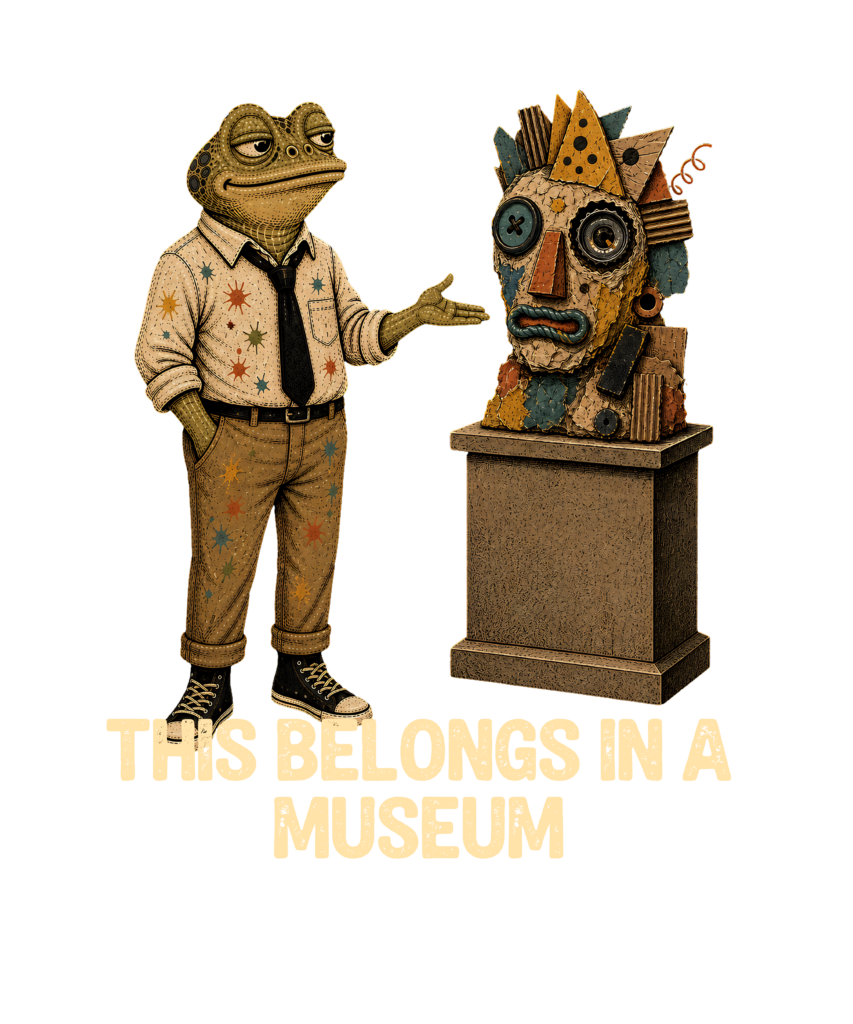
P.S. Vincent has opinions about art history.
He supports reimagined masterpieces, dramatic side-eye, and shirts your art teacher friends will understand.
Browse art history teacher shirts →
You can bring these creative, ready-to-use worksheets straight into your middle school art classroom today.
Be the first to know about discounts, freebies, and new resources!
Find me on my blog – Inside Out Art Teacher, YouTube, or Instagram.