You know that point in the year when the art room just feels… off?
Not bad.
Just louder.
Looser.
A little harder to manage.
Projects are halfway done.
Someone is asking if they can redo something from January.
The pencils are disappearing at an alarming rate.
And you’re standing there thinking:
How are there still this many days left?
If you teach art at the end of the year, you know this part of the school year is its own thing.
Not quite normal class.
Not quite the last day.
Just… a weird in-between.
If you need end of the year art projects that are simple, flexible, and realistic for the last weeks of school, the goal is not to start something huge. These low-prep art activities and lessons give students a clear starting point while still leaving room for creativity.
What Do You Even Teach at the End of the Year?
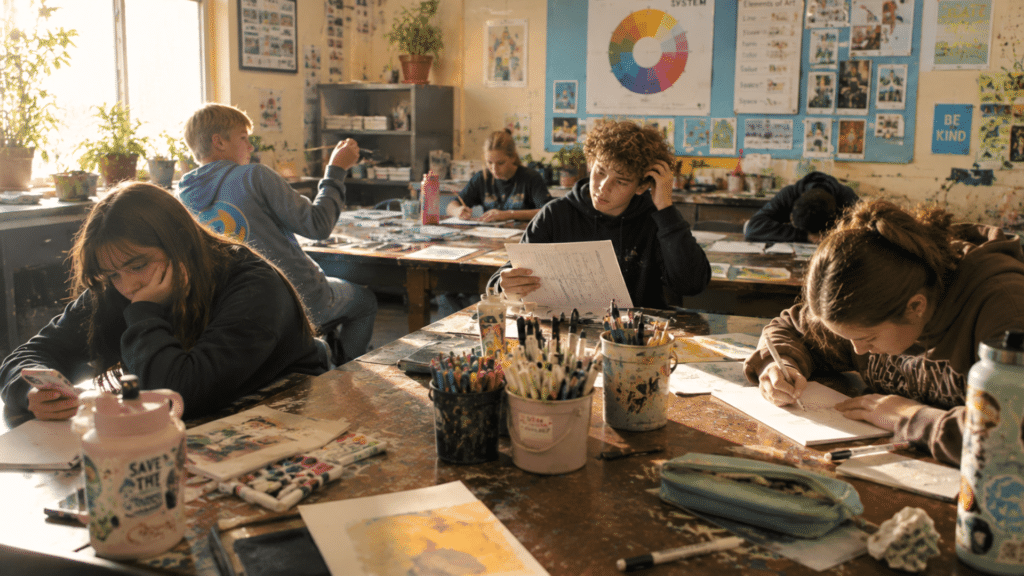
This is the question that starts creeping in around May.
Do you start something new?
Try to finish everything?
Or just keep everyone busy and hope for the best?
Because let’s be honest… you’re not teaching one class right now.
You’ve got:
- one group still trying
- one group already on summer break mentally
- one group absent for testing, field trips, or senior activities
- and one group asking what they’re supposed to be doing for the third time
So instead of forcing everything to feel “normal,” it helps to shift the goal.
Right now, it’s about keeping students making something, moving forward, and not needing you every two minutes.
That’s where simple, structured end-of-year art projects can save you.
Do I Really Want to Start a New Art Project Right Now?
No. You don’t.
This is not the time for long demos or complicated setups.
If it takes more than a few minutes to explain, you’re probably going to lose half the room before anyone even writes their name on the paper.
What works right now is simple:
Paper.
Pencil.
Start.
At the end of the year, the best art projects are usually the ones students can begin right away, understand quickly, and come back to easily if they miss a day.
You want enough structure that they know what to do.
But enough flexibility that they can still make it their own.
Easy End of the Year Art Projects Students Can Start Right Away
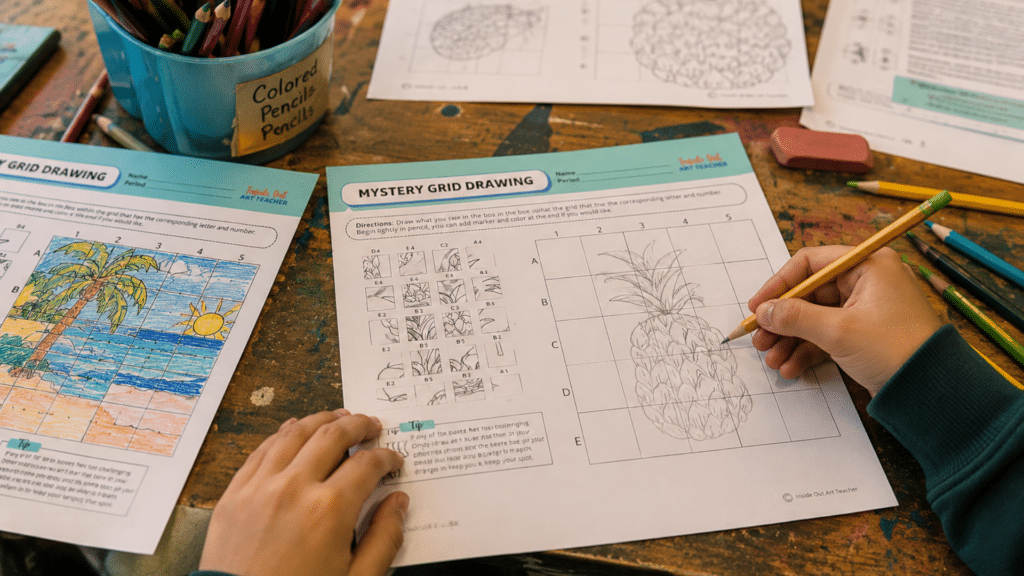
Students sit down and just… begin.
No wandering.
No confusion.
No repeating the directions five times while three people ask to go to the bathroom.
The key is giving students a clear starting point.
That might be a worksheet, a reference image, a simple drawing guide, or a project that breaks the artwork into small, manageable steps.
This is where grid drawing works incredibly well.
Students go square by square.
At first, they may have no idea what they’re drawing.
Then the image starts to appear.
And suddenly… they care.
You’ll have kids quietly trying to figure it out before anyone else.
It’s one of the few things that can actually calm the room this time of year.
You can create this kind of activity with your own reference images, or use a ready-to-go grid drawing lesson if you want something already organized and easy to print.
This kind of structured activity also works well as part of your art sub plans because students have clear directions and can begin without a long demo.
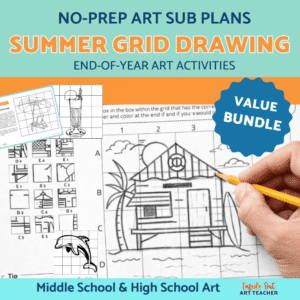
Ready-to-print option
If you want this already organized, the Summer Mystery Grid Drawing Bundle gives students a clear starting point they can work through independently, then develop into a more finished artwork with color, background details, and personal choices.
Use the Worksheet as a Starting Point, Not the Whole Project
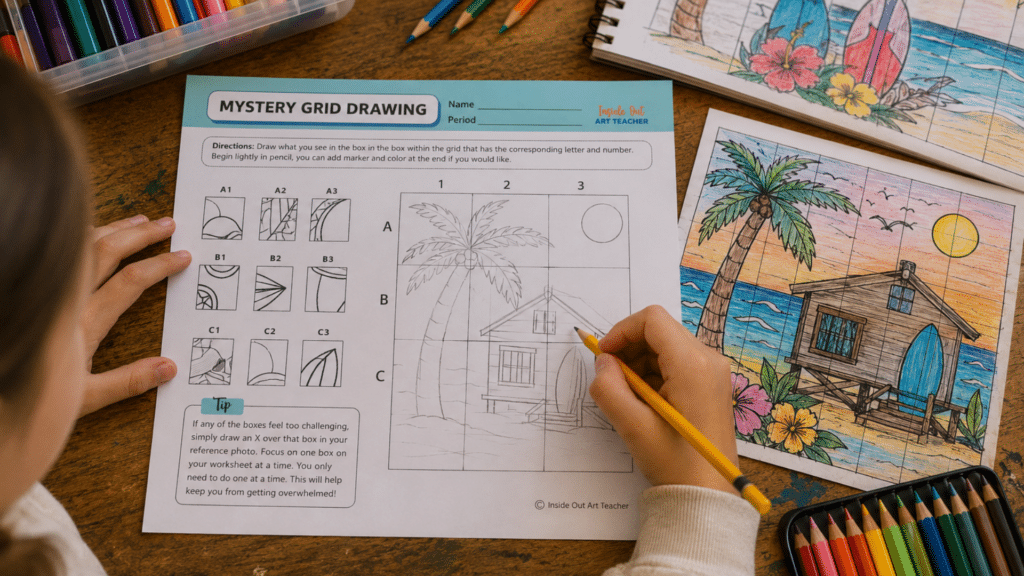
One thing I love about simple worksheet-based lessons is that they don’t have to stay as worksheets.
They can be the starting point.
Students can complete the drawing on the worksheet first, then transfer or redraw it onto better paper and turn it into a more finished piece of art.
From there, they can add their own creative choices:
- a background
- color
- patterns
- extra details
- watercolor
- colored pencil
- marker
- paint marker
- their own style or theme
This gives students a clear place to begin, which makes the project feel less intimidating during those unpredictable last weeks of school.
But it also leaves room for them to make choices, take ownership, and turn the basic drawing into something more personal.
That balance is really helpful at the end of the year.
They are not starting from a blank page, but they are also not locked into one exact answer.
Here are a few examples of how students can take a simple starting point and turn it into a more finished end of the year art project.
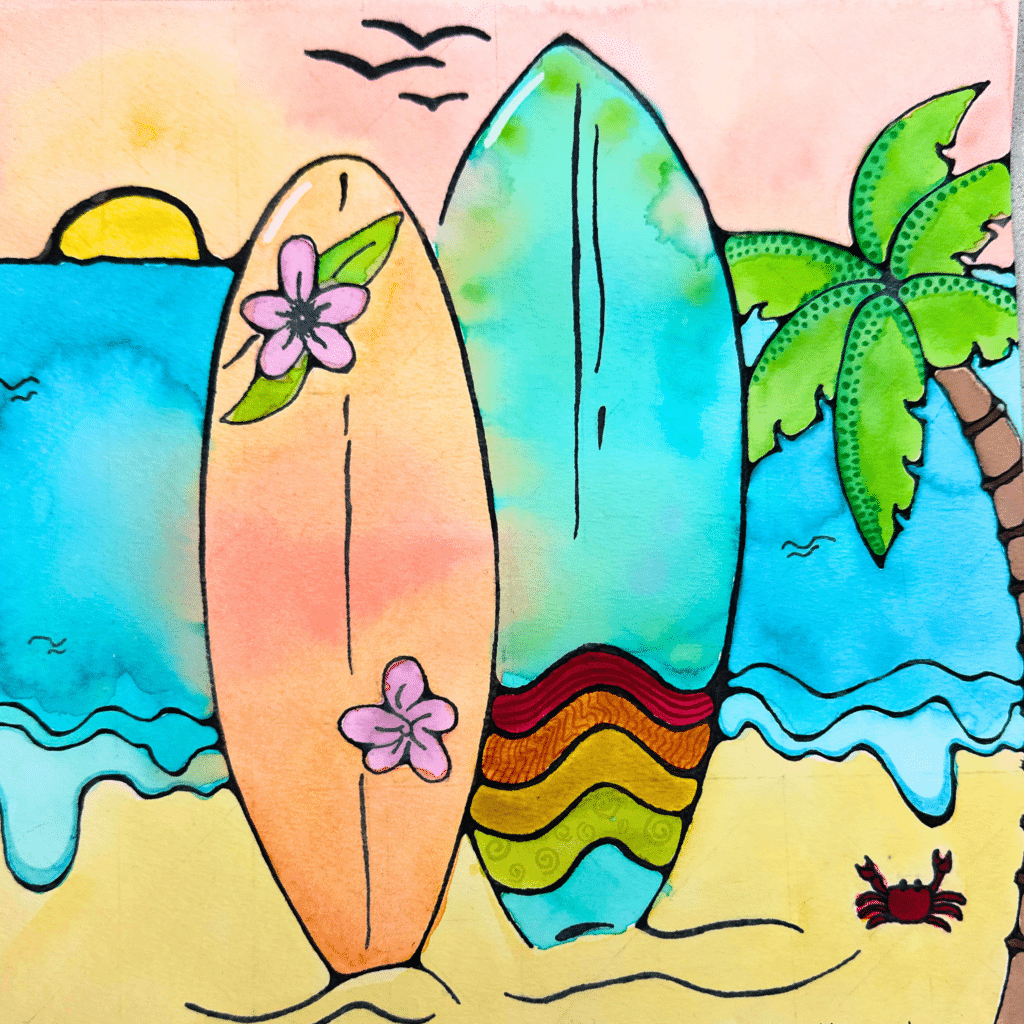
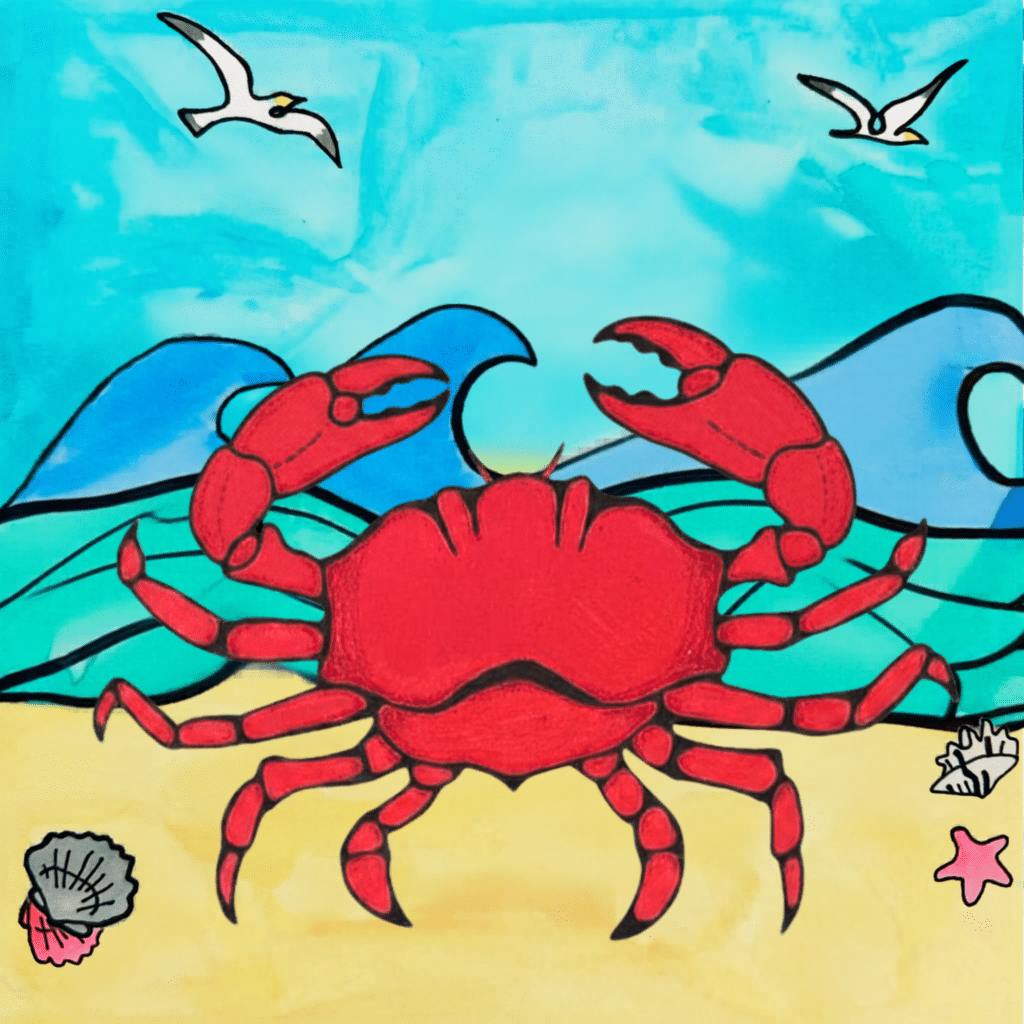
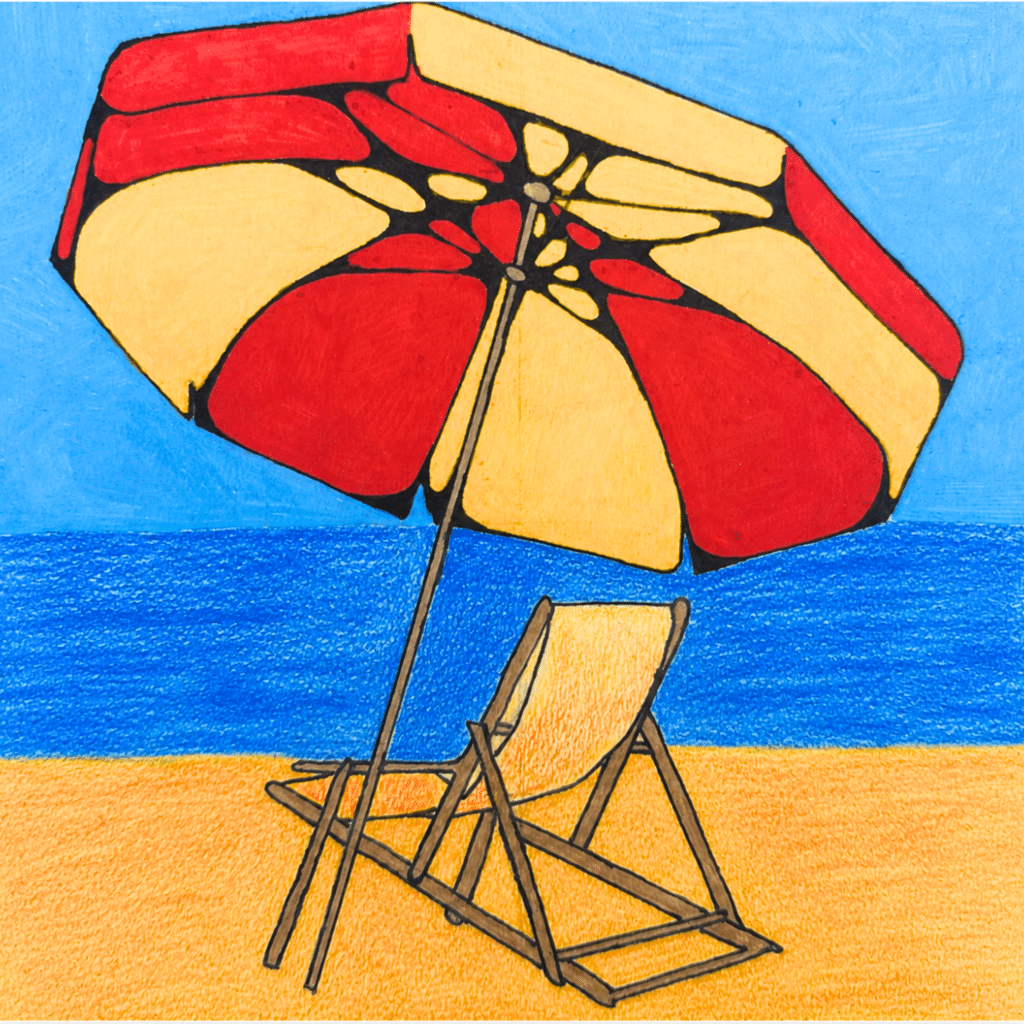
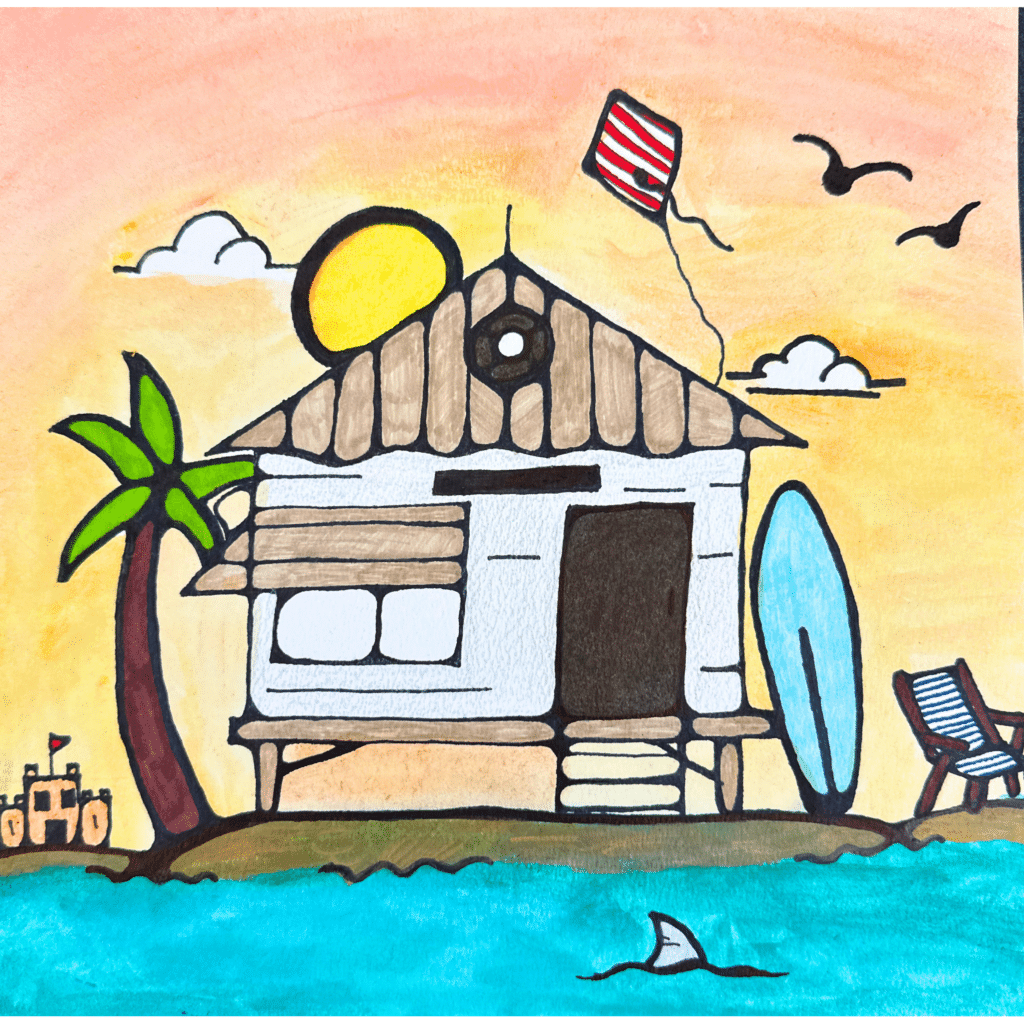
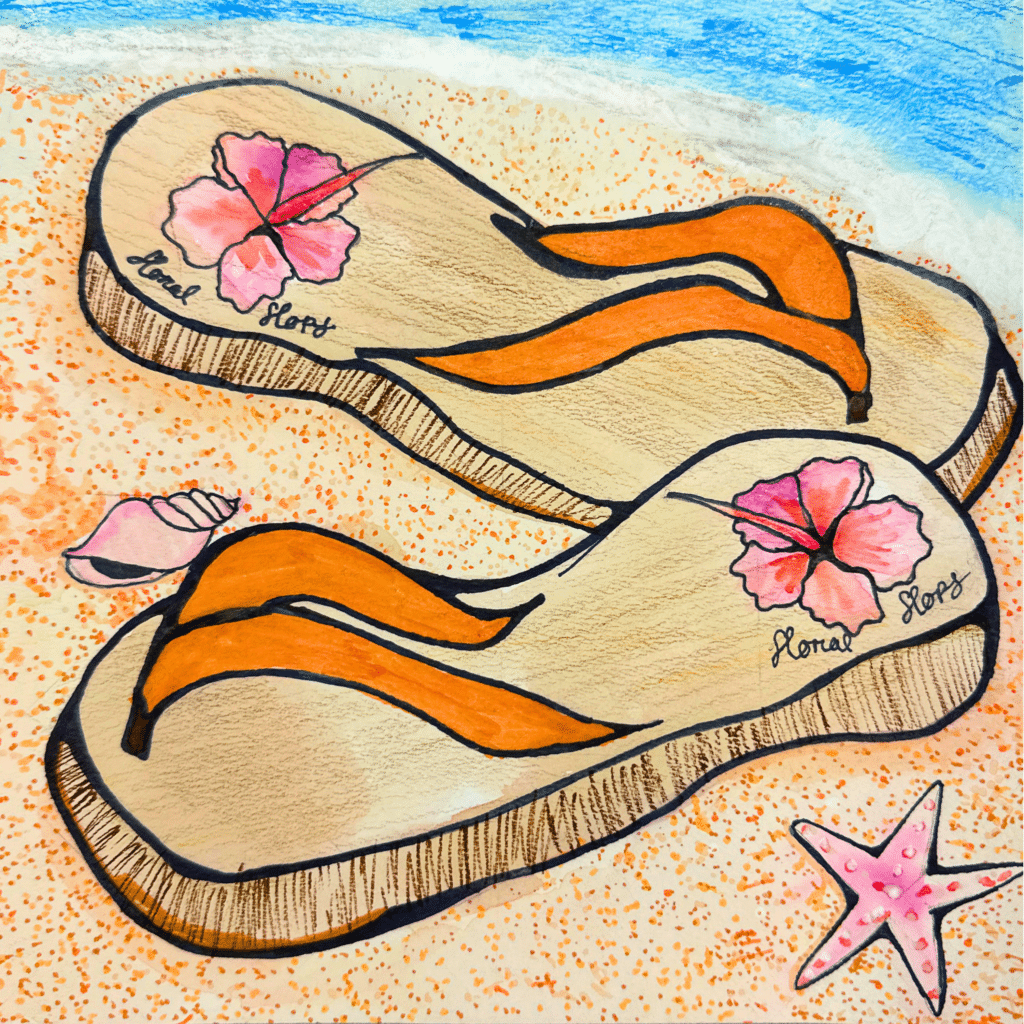
The same idea works with symmetry drawing, task cards, guided worksheets, and other structured activities. You give students the starting point, and they bring the personality.
Why Structured End-of-the-Year Art Activities Work
By the end of the year, every class seems to have its own weather system.
One group is calm and focused.
One group is suddenly feral.
One group has half the students missing because of testing, field trips, senior activities, or some mysterious schedule change no one told you about.
That’s why you need lessons that don’t fall apart when the energy shifts.
Not strict.
Just clear.
Something students can do without needing you every two minutes.
Structured activities work really well as end-of-year art lessons because they give students enough direction to keep going, even when the room feels unpredictable.
Things like:
- symmetry drawing
- task cards
- guided worksheets
- simple reference-based drawing activities
They give just enough direction to keep things moving.
And when students have a clear starting point, they’re much more likely to settle in and work.
You can build this kind of activity with your own images and directions, or use a ready-made symmetry lesson if you want something simple to print and go.
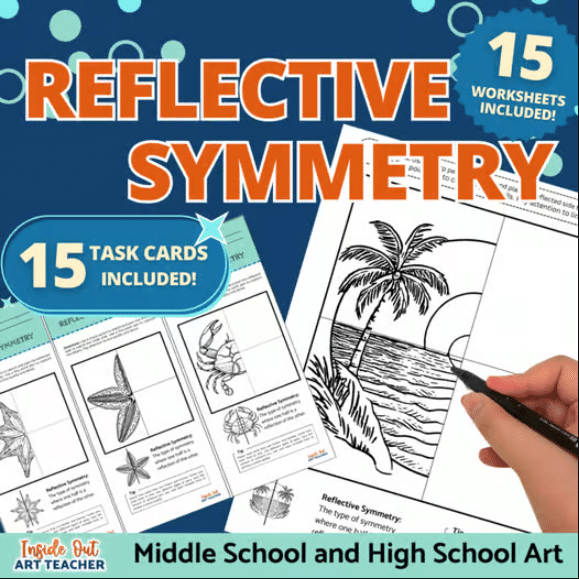
Ready-to-print option:
The Summer Reflective Symmetry lesson works well for unpredictable end-of-year days because students have clear directions, but still have room to add color, pattern, and creative details.
What Do You Do When Students Finish Early in Art?
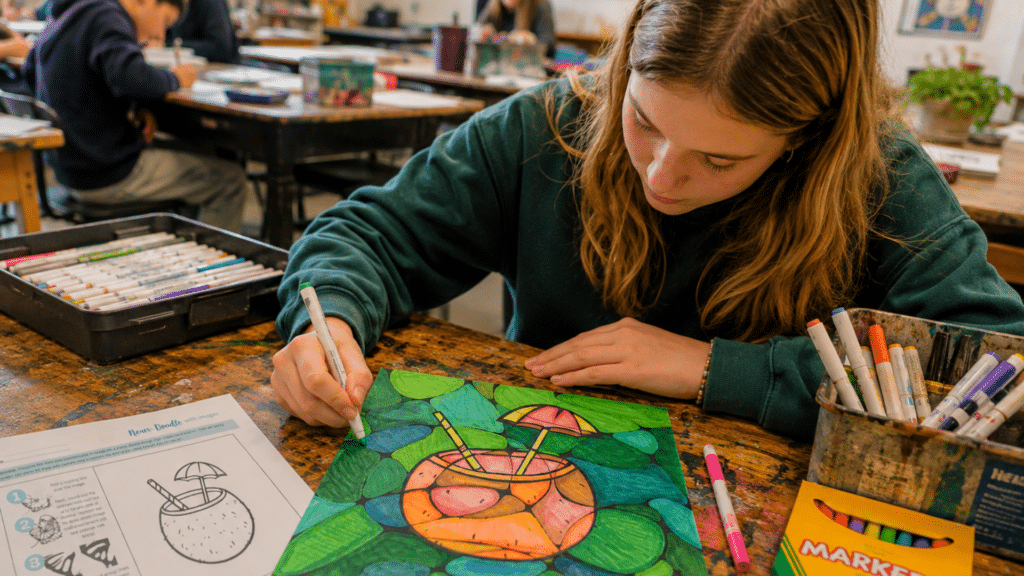
A few students are done… way earlier than expected.
And now they’re just sitting there.
Looking at you.
Waiting.
This is where a lot of end-of-the-year art projects can fall apart.
You don’t need a whole new plan.
You just need a few easy ways for students to keep building on what they already started.
They can:
- add a background
- create a border
- add patterns
- layer in color
- add shading or texture
- use watercolor, colored pencil, marker, or paint marker
- add extra objects or details that connect to the theme
This keeps early finishers working without turning the project into a completely different assignment.
It also helps the artwork feel more finished, more personal, and less like something they rushed through just to ask, “What do I do now?”
What If Your End-of-the-Year Art Lesson Just… Isn’t Working?
You know the day.
The energy is off.
The lesson isn’t landing.
Everything feels harder than it should.
This is not always the moment to push through.
Sometimes it’s the moment to pivot.
At the end of the year, it helps to have a few simple backup options that don’t require a full reset.
Even switching materials can help:
Markers instead of pencil.
Watercolor instead of markers.
Colored pencil instead of paint.
A border instead of a full background.
Sometimes that small shift is enough to get students moving again.
The goal is not to create a whole new assignment.
The goal is to give students a clear next step so the class does not completely unravel five minutes before the bell.
A Little End-of-Year Art Teacher Humor
Quick shift for a second.
Because if you’ve made it this far into the year, you deserve something that gets it.
Not another inspirational quote about making a difference.
Not something overly cutesy.
Just something that feels… accurate.
I started making these Vincent the Frog art teacher shirts for exactly that reason.
They’re for the art teachers who are counting down the days, cleaning out the sink, trying to return mystery supplies to the correct cabinet, and still answering, “Is this good?” twelve times before lunch.
Here are three Vincent favorites for the final stretch: “That’s A Wrap” for survival mode, “Define Done” for the eternal finishing-work conversation, and “Is This Good?” for those reassurance-seeking moments we hear all day.
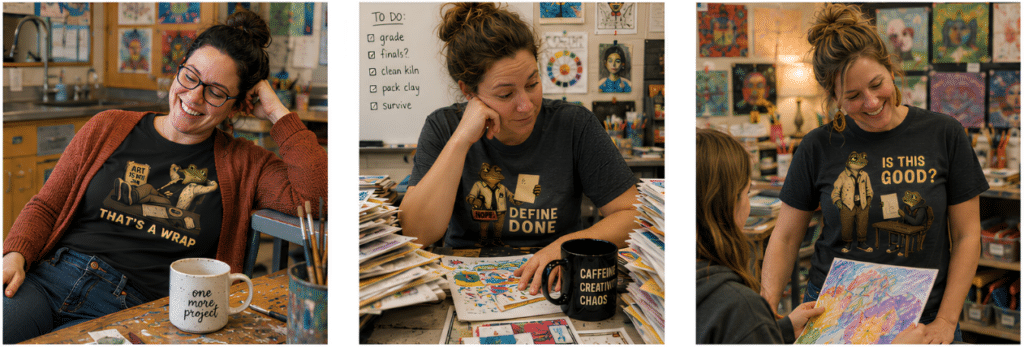
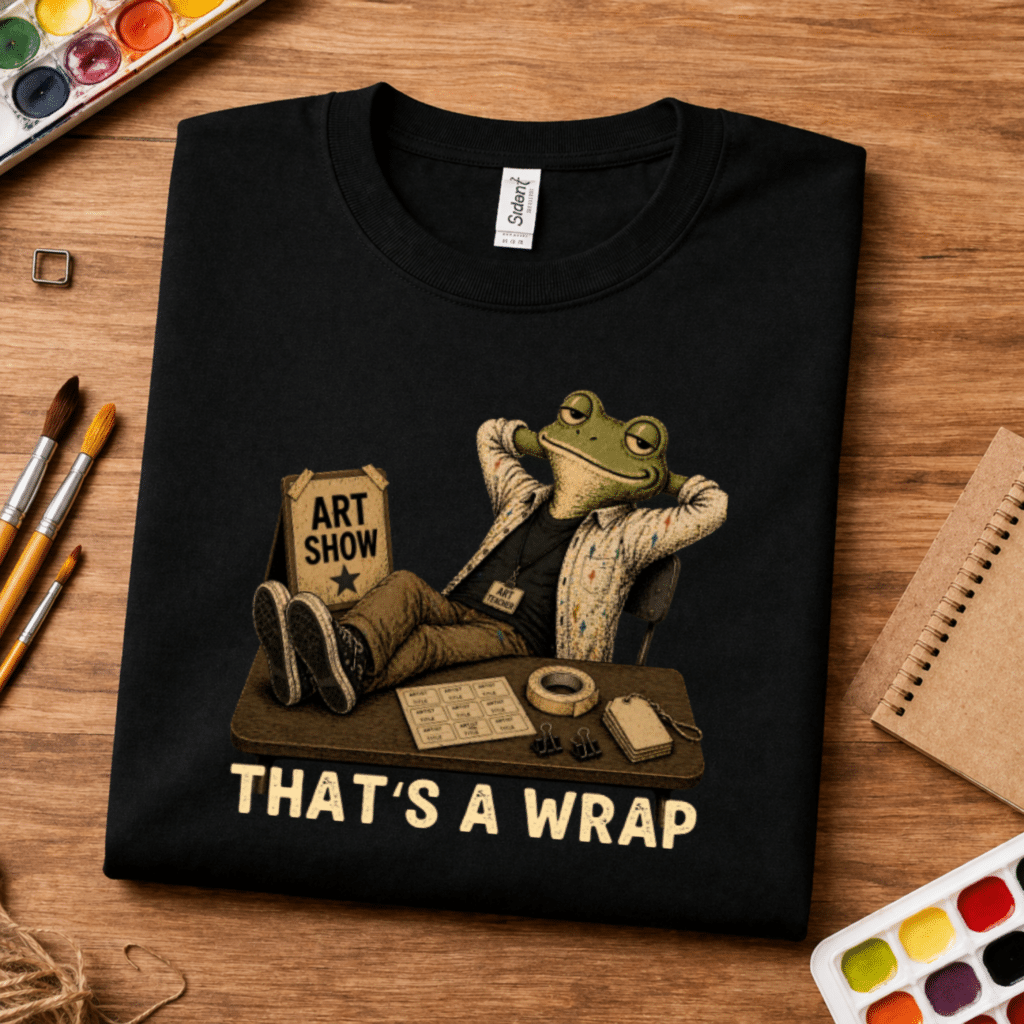
That’s A Wrap
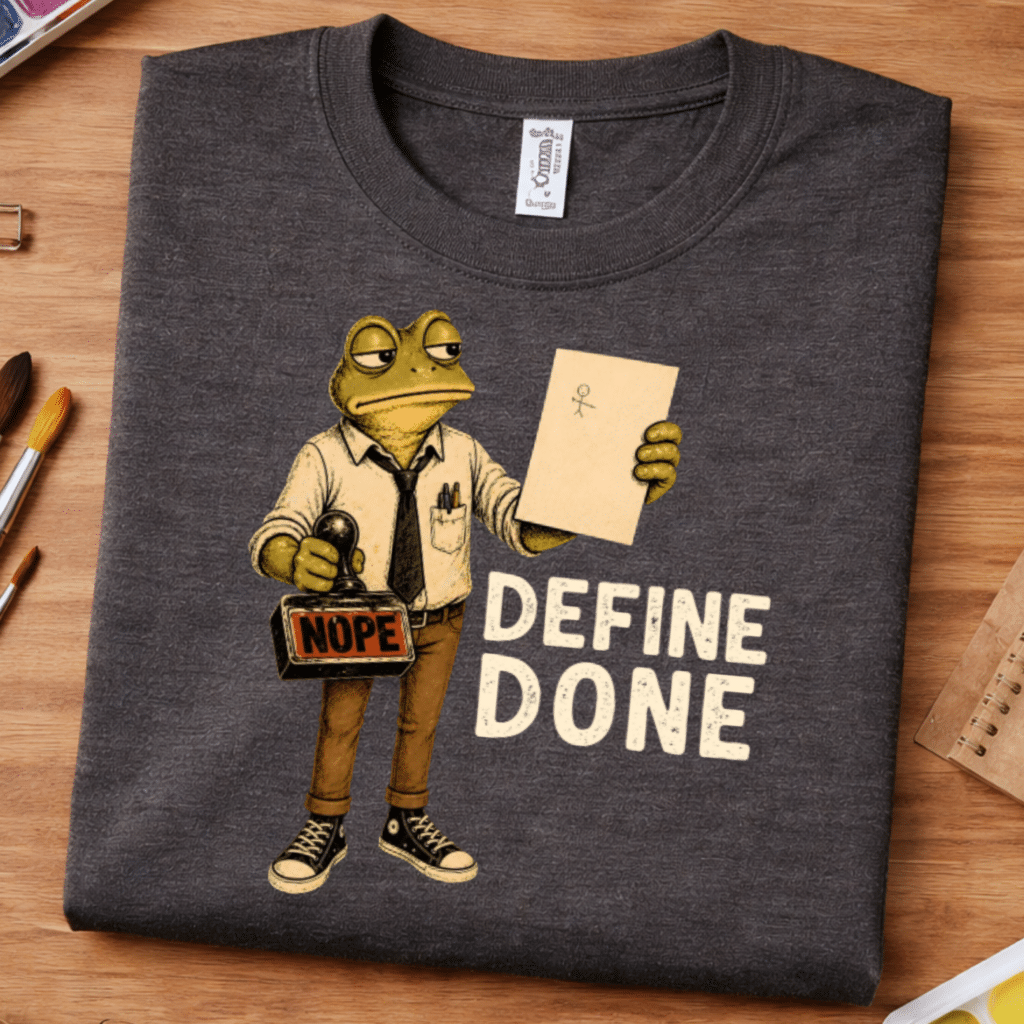
Define Done
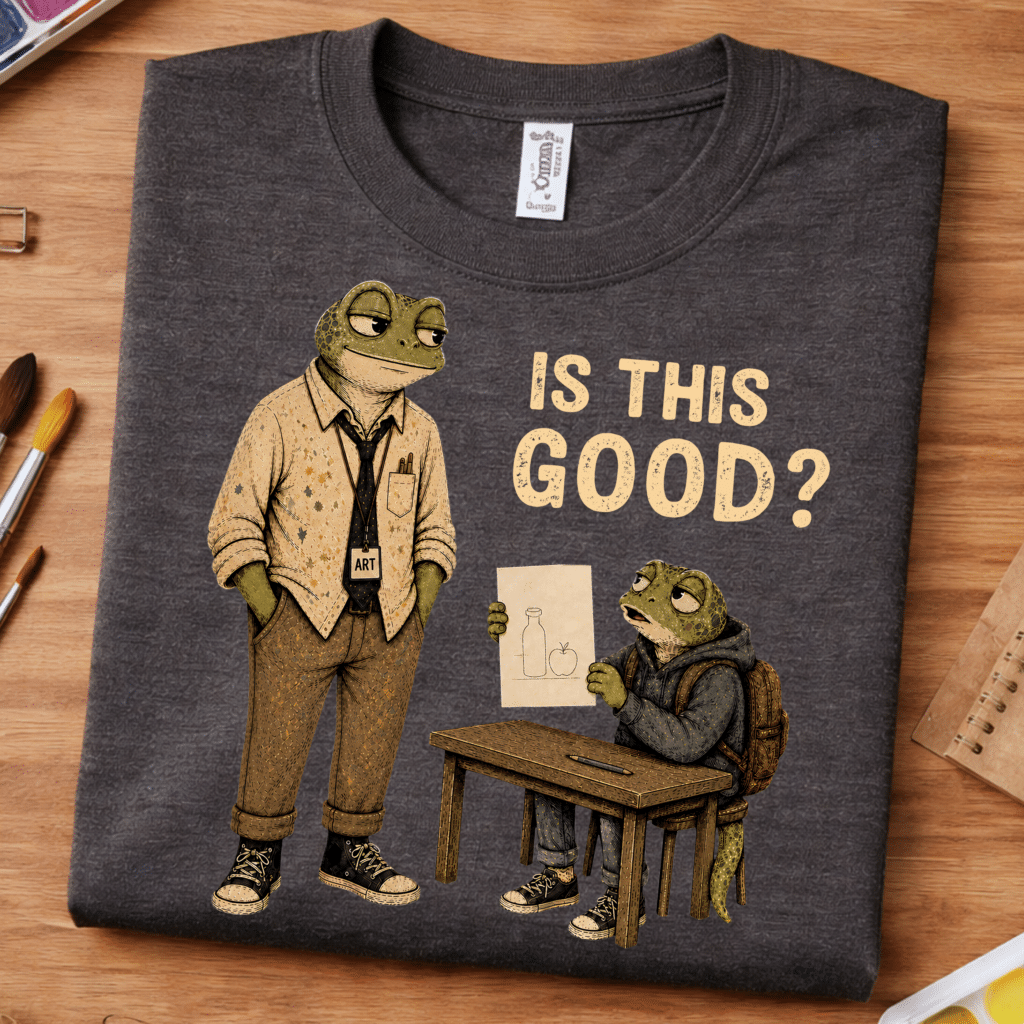
Is This Good?
What Actually Matters at the End of the Year
Not perfect projects.
Not perfectly finished projects.
What matters is that students are still making things.
Still trying.
Still finishing something.
You’ll see it in small moments.
A student slowing down.
Adding one more detail.
Looking at their work and saying:
“Wait… this actually looks good.”
That’s the part they remember.
And honestly…
That’s the part that makes all of this worth it.
The best end of the year art projects are not always the most complicated ones.
Final Thought
The last weeks of school are weird.
The routine is off.
The energy is unpredictable.
And nothing feels fully finished.
But there are still good moments in there.
A quiet class.
A focused student.
A project coming together when you didn’t expect it to.
You’re almost there.
And somehow… you got them there too.
Be the first to know about discounts, freebies, and new resources!
Find me on my blog – Inside Out Art Teacher, YouTube, or Instagram.