
Why First-Week-of-School Art Activities Matter
The first week of art class can shape how students feel about the room, the subject, and their own creative abilities. Many students arrive worried that they “can’t draw” or that their work will not be good enough. Simple, welcoming first-week-of-school art activities can lower that anxiety and help everyone begin with confidence.
Here are a few reasons I like to start the year with approachable back-to-school art activities, first-week art projects, and beginner-friendly art lessons:
They feel manageable. A low-pressure activity gives hesitant students a chance to settle in without feeling tested on the very first day.
They create an early win. When students complete a project they feel proud of, they begin to associate art class with success instead of frustration.
They encourage self-expression. Projects that allow students to include their own interests, ideas, and personalities help them feel seen and valued.
They build foundational skills. Even simple first-day art activities can introduce skills students will use later in more complex projects.
They help build classroom community. When students share something about themselves through their artwork, classmates begin learning about one another and building trust in the art room.
Over the years, I have found that the best first-week-of-school art projects and lessons do more than keep students busy. They help establish the art room as a place where students can experiment, make mistakes, and grow.
The projects matter, but the routines around them matter too. If you are also rethinking cleanup, supplies, transitions, and expectations, my guide to art classroom systems that build student ownership and protect your peace walks through the structures that have made the biggest difference in my room.
Below are some of my favorite first-day art class activities, creative name art ideas, and beginner-friendly high school art projects. Some work well as quick one-day lessons, while others can help you build momentum for the first few weeks of school.
Need more than a quick first-day activity? These are the first three beginner drawing lessons I teach each year. They help students build confidence gradually while giving me a clear, low-stress plan for the first few weeks.
1. Pop Art Name Project for the First Week of School

This colorful Pop Art name project is one of my favorite ways to begin the school year. Students create a bold, Pop Art-inspired design featuring their own names while learning about bright color, pattern, repetition, and contrast.
Because the project centers on each student’s name, it gives them an immediate opportunity to express their personality and feel seen in the art room. The finished designs also make a vibrant classroom display that helps the space feel welcoming from the very beginning.
Why Teachers Love This Pop Art Lesson
- It immediately grabs students’ attention. Bold colors, patterns, and lettering make this an engaging first-week-of-school art activity.
- It is easy to implement. The complete lesson includes a slideshow, printable handouts with step-by-step directions, and a video demonstration, which means less prep during an already busy week.
- It creates meaningful classroom décor. Displaying the finished name designs gives students ownership of the art room and creates a colorful, personalized Pop Art display.
What Students Learn
- Self-expression. Students make individual choices about color, lettering, pattern, and composition.
- Artistic confidence. The structured steps help beginners create a finished piece they can feel proud of.
- Pop Art concepts. Students are introduced to the bold colors, graphic shapes, repetition, and popular imagery associated with Pop Art.
Starting the year with a project based on students’ names sends a simple but important message: they belong here. Displaying the work reinforces that feeling and helps build a positive classroom community from the first week.
View the Complete Pop Art Name Lesson.
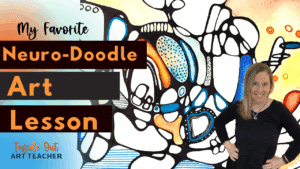
2. Neurographic Art Lesson Plan for a Calm First Week

This beginner-friendly neurographic art activity works especially well during the first week of school because it is relaxing, approachable, and requires no prior drawing experience. Students use flowing lines, rounded intersections, color, and pattern to create an abstract composition while settling into the routines of the art room.
Because there is no single “right” outcome, students can experiment without worrying that their work has to look realistic or match anyone else’s. That makes neurographic art a strong first-week-of-school art activity for both middle and high school students.
Why Teachers Love Neurographic Art
- It requires very little preparation. The process is simple to explain and easy for students to begin, making it a practical choice during an already busy week.
- It helps create a calm classroom atmosphere. The slow, repetitive drawing process encourages students to focus and settle into the space.
- It works for mixed skill levels. Beginners can feel successful, while more experienced students can explore more complex color, pattern, and composition choices.
What Students Learn
- Trust in the process. A gentle, manageable first project helps students relax and see that art class is a place where they will be supported—not set up to fail.
- Confidence in themselves. Early success helps quiet the “I can’t draw” voice and gives students courage to try more challenging work later.
- Calm and focus. The repetitive drawing process helps everyone settle in, including the teacher. It creates a peaceful start while students practice making thoughtful choices about line, color, pattern, and composition.
Starting the year with a quick, successful project can help students feel more comfortable in a new class. Neurographic art creates a relaxed beginning while introducing line, pattern, color, and composition.
Explore Neurographic Art Lessons and Ideas
A Little Something for the Art Teacher
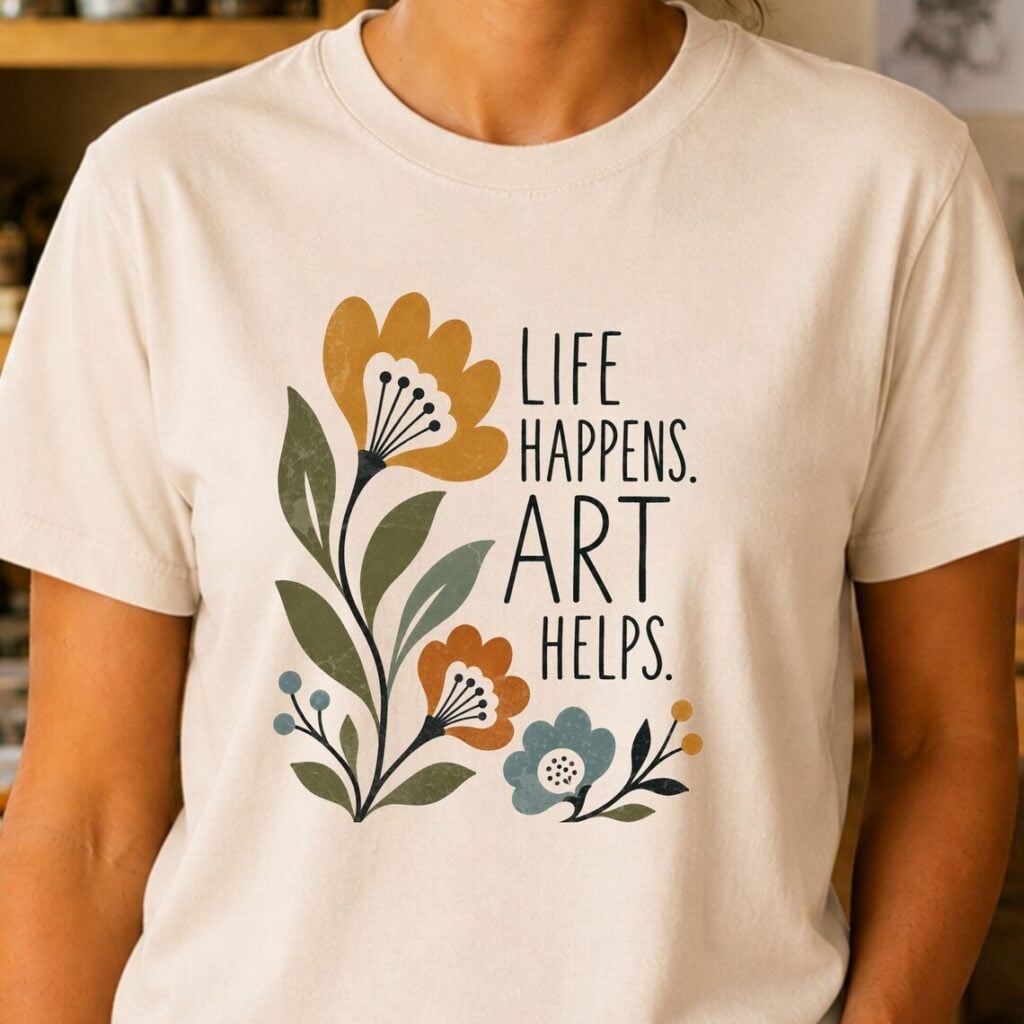
The first week is a lot for students—but it is a lot for us, too. Between learning names, organizing supplies, and getting everyone settled, sometimes it helps to wear something that makes the day feel a little more fun.
I’ve been creating art teacher shirts inspired by the humor, creativity, and occasional chaos of life in the art room. Here are three of my favorites for heading back to school.


3. Create Your Own Sketchbook

Having students create their own sketchbooks is a practical and personal way to begin the year. They leave with a tool they can use all year, while the process of designing the cover gives them an immediate sense of ownership.
Students can personalize their sketchbooks with colors, patterns, imagery, and lettering that reflect who they are. That small choice matters—it helps the sketchbook feel like theirs, rather than just another item handed to them.
Why Teachers Love This Project
- It serves a purpose all year. Students can use the sketchbooks for planning, drawing practice, reflections, early-finisher activities, and experimenting with new techniques.
- It encourages responsibility. Students are often more likely to care for materials they helped create and personalize.
- It gives you flexibility. A sketchbook becomes an easy place to introduce short drawing exercises, creative prompts, and new techniques throughout the year.
What Students Learn
- Ownership. Creating and decorating their own sketchbook helps students feel invested in the class from the beginning.
- Creative identity. The cover design gives students a low-pressure way to share their interests and personality.
- Confidence and independence. Students begin the year with a personal space where they can experiment, make mistakes, and develop ideas without worrying that every page has to become a finished masterpiece.
Starting the year with this project helps students feel invested in their own learning and materials. It fosters a sense of ownership and pride, which can translate into more engaged and responsible learners throughout the year.
Explore the Handmade Sketchbook Lesson
4. About Me Art Worksheets for the First Day of School

These creative About Me worksheets are an easy way to get to know your students without putting anyone on the spot. Students respond to short writing and drawing prompts that let them share their interests, personalities, and ideas in a low-pressure way.
They work especially well as a quick first-day art activity because students are focused on something familiar—themselves—while you begin learning who they are and what matters to them.
Why Teachers Love These Worksheets
- They help you learn about students quickly. Their responses give you helpful insight into their interests, personalities, and comfort levels.
- They begin building classroom community. Students start to see common interests and feel more connected to the people around them.
- They are easy to use. The simple setup makes them a practical choice when you are juggling names, schedules, supplies, and all the other first-day chaos.
What Students Learn
- Self-expression. Students can share who they are through both drawing and writing.
- Connection. The prompts help students find common ground with classmates and begin feeling like part of the group.
- Comfort and belonging. Starting with familiar topics helps ease first-day nerves and shows students that their ideas and experiences matter in the art room.
View the About Me Art Worksheets.
5. Doodle Drawing Activity for the First Day of School

Doodle drawings are a simple, low-pressure way to get students creating right away. Because there is no single correct outcome, students can relax, follow their ideas, and make something personal without worrying about whether it looks “good enough.”
This makes doodling a strong first-day art activity, especially for students who feel nervous about drawing or unsure of what will be expected in class.
Why Teachers Love This Activity
- It is quick to set up. The lesson includes a Google Slides presentation, printable handouts, and information about the benefits of doodling.
- It gives you useful insight. Students’ drawings can reveal their interests, ideas, and comfort levels in a natural, informal way.
- It creates a relaxed atmosphere. The open-ended format helps everyone settle in without the pressure of a major project.
What Students Learn
- Creative freedom. Students can explore ideas without worrying about making a perfect finished artwork.
- Self-expression. Doodling gives students an easy way to show their personality through images, symbols, patterns, and words.
- Confidence. A successful first experience helps students feel more comfortable taking creative risks later in the year.
Starting with doodle drawings helps break the ice and sends a reassuring message: art class is a place where students can experiment, be themselves, and begin without having all the answers.
View the First-Day Doodle Lesson.
Looking for a Plan Beyond the First Day?

These quick activities are perfect when you need an easy way to begin. But sometimes you need more than one first-day idea—you need to know what comes next.
These are the first three beginner drawing lessons I teach each year to help students build confidence gradually, move into observation, and feel successful before tackling more challenging drawing.
See the First Three Beginner Drawing Lessons I Teach
Ready for a Strong Start?
These quick art projects for beginners do more than fill the first few days of school. They help students relax, build confidence, and begin seeing the art room as a place where they can take creative risks and be successful.
Each activity offers an approachable way to introduce routines, encourage self-expression, and start building trust with students from the beginning. Whether you need a one-day activity or a simple project to carry you through the first week, these ideas can help create a calm, welcoming start to the year.
Use the links above to explore the full lessons, classroom ideas, and ready-to-teach resources.
Here’s to a first week that feels a little less chaotic—and a lot more creative.
Keep Planning Beyond the First Few Weeks
Once your first projects are in place, you can browse more classroom-tested ideas in my middle school art projects and high school art projects planning guides. Both pages organize lessons by medium and teaching goal so you can quickly find what fits your students, schedule, and supplies.
Be the first to know about discounts, freebies, and new resources!
Find me on my blog – Inside Out Art Teacher, YouTube, or Instagram.