
There’s a moment early in the school year that every art teacher knows. You planned the perfect art project for high schoolers.
You pass out paper.
You explain the project.
You say, “Go ahead and start.
And instantly, the room tells you everything.
A handful of students are already sketching before you finish the sentence.
A few stare at the page like it personally wronged them.
Someone asks, “Wait… what are we drawing again?” even though you just explained it.
And a few students don’t say anything at all. They just sit there, frozen, pencil hovering, already convinced they’re going to mess it up.
You haven’t even made it halfway around the room yet.
I’ve lived in that moment more times than I can count. For a long time, I thought that was just the reality of teaching art. Some kids were “artists.” Some weren’t. Some loved drawing. Some tolerated it. And some resisted with every ounce of teenage energy they had.
But over the years, I realized something that completely changed how I plan my lessons:
Most students don’t struggle in art because they lack creativity.
They give up because they’ve never felt successful doing it.
For even more project ideas, check out our Middle School Art Project Guide (great if you teach across grades!) and our High School Art Project Guide for a larger collection of advanced and semester-long projects.
Why Beginner Art Lessons for Middle School and High School Often Miss the Mark

Here’s what I see again and again in art projects for high schoolers and junior high students, especially at the beginning of the year:
- Students want clear directions but also want their work to feel personal
- Beginners need structure, but too much structure kills creativity
- Confident artists want freedom, but total freedom overwhelms everyone else
- Teenage boys and “non-art kids” disengage the moment something feels childish or pointless
Finding beginner drawing ideas that balance structure and self-expression is harder than it sounds.
I’ve tried the ultra-open projects.
I’ve tried the step-by-step tutorials.
I’ve tried “just experiment!”
I’ve tried “copy this exactly.”
None of those approaches worked for everyone.
What finally changed things for me was realizing that confidence comes before creativity. Students need to feel capable before they can feel expressive.
That’s where this scaffolded easy line drawing with grid method lesson come in.
Why Art Projects for High Schoolers With Clear Structure Build Confidence (Without Killing Creativity)
For a long time, I thought confidence in art came after creativity.
Like, once students felt inspired enough, everything else would fall into place.
That turned out to be backwards.
What I see in my classroom now is this: students don’t need more freedom at the beginning. They need clarity.
They need to know:
- where to start
- what matters first
- and how to move forward without feeling lost
When students have that, they don’t panic.
They don’t freeze.
They don’t give up halfway through.
They work.
And when they work, something important happens. They start to believe they can do art.
One of the most reliable ways I’ve found to create that shift is through structured line-drawing projects that feel calm, intentional, and achievable from the very first step.
👉 If you’re curious what that looks like in practice, I break down three of my most reliable, no-prep beginner drawing art projects for high schoolers in this post: 3 No-Prep Beginner Drawing Lessons for Overwhelmed Middle & High School Art Teachers.
Each one removes a different kind of pressure and helps students feel successful early.
The Easy to Draw Line Art Project That Finally Reached My “Non-Art” Students
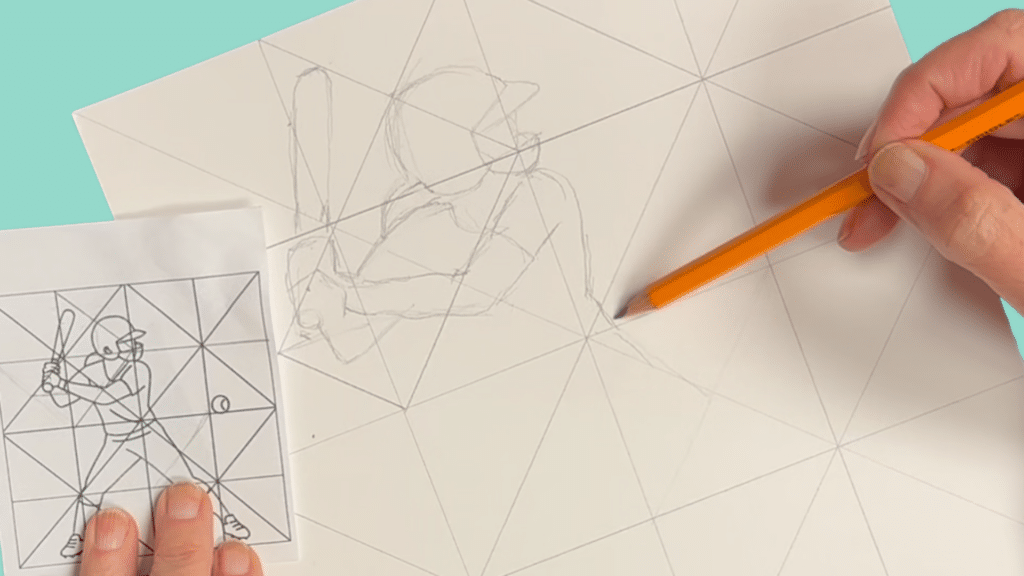
I started using an X-grid neurographic easy line drawing with grid method lesson after years of watching the same pattern repeat.
Students would jump straight into details.
Things wouldn’t line up.
Frustration would set in.
And confidence would disappear.
This lesson changed that.
Here’s why it works when so many others don’t.
1. This Beginner Art Project Removes the Blank-Page Panic
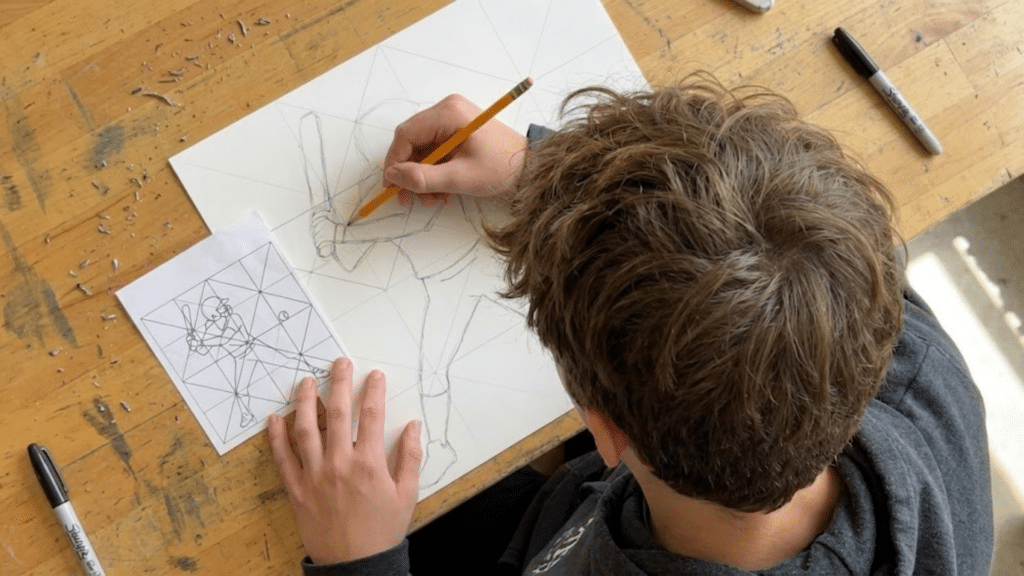
Instead of asking students to invent something out of thin air, the grid gives them a place to begin.
They aren’t guessing where things go.
They aren’t comparing themselves to the “good drawers.”
They’re focused on one small section at a time.
That alone lowers anxiety almost immediately.
2. This Art Project for High Schoolers Slows Them Down in the Right Way
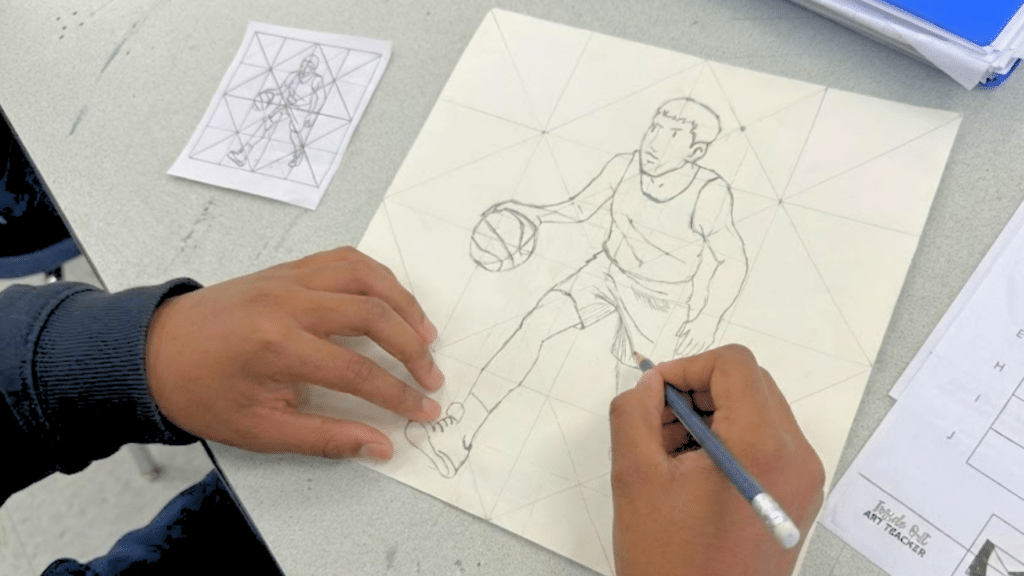
One of the biggest beginner mistakes high schoolers and junior high art students make is jumping straight into details and getting frustrated when things don’t line up.
This element of line art lesson slows them down in the best way.
First, students map out shapes and placement.
Then, they refine lines.
Then, they add design and color.
That sequencing teaches them how artists think, not just what to draw.
3. Easy to Draw Line Art Reaches Students Who Usually Tune Out

I’ll say it plainly: not every student connects with traditional art prompts.
Sports imagery. Animals. Bold lines. Clean structure.
Those elements matter.
When students see reference options that reflect their interests, buy-in changes. Suddenly, the lesson doesn’t feel like “art class stuff.” It feels relevant.
And once they’re engaged, the learning sticks.
4. This Easy-to-Draw Line Art Makes Imperfection Look Intentional

Neurographic-style line work is forgiving in the best way.
Lines don’t have to be perfect.
Mistakes don’t ruin the piece.
Overlaps become part of the design.
For beginners, that’s huge.
Instead of erasing endlessly or giving up, they keep going. And the final result still looks thoughtful and complex.
5. This Art Project for High Schoolers Produces Work Students Are Proud Of

This might be the most important part.
Students finish this project.
Not rushed. Not half-done. Finished.
They step back and say, “Oh… this actually looks good.”
That moment changes how they approach the next lesson. And the one after that.
Why This Easy Line Art Works for Beginners

At the start of the year, students are testing you. Testing the class. Testing themselves.
They’re asking:
- “Am I going to fail here?”
- “Is this class going to stress me out?”
- “Do I belong in this room?”
A scaffolded easy line drawing using grid method lesson answers those questions quietly.
It says:
- You don’t need to be an artist to succeed here.
- You will be supported, not micromanaged.
- You will finish something you’re proud of.
That’s why I keep coming back to this lesson year after year.
It works as a true beginner drawing lesson for middle school and high school.
It works for students who claim they “can’t draw.”
It works for classes with mixed ability levels.
It works when I need calm focus, not chaos.
And most importantly, it works for the kids who usually feel left out of art.
Helping Every Student See Success in Art
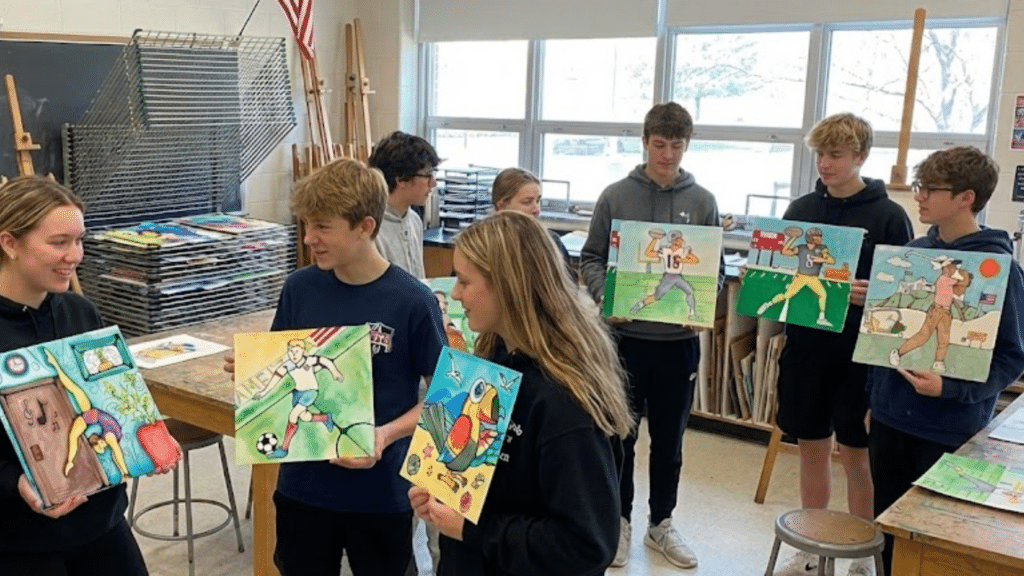
I don’t believe that only a handful of high schoolers or junior high students are meant to succeed in art.
I believe most students just haven’t been given the right entry point yet.
When you combine structure, patience, and room for personal expression, something shifts. Students stop asking, “Is this good enough?” and start asking, “What if I try this?”
That’s the goal.
Not perfection.
Not masterpieces.
Confidence.
And once students believe they can succeed, everything else becomes possible.
If you’ve been searching for a beginning-of-year art lesson that actually works for all students, especially the hesitant ones, this approach is worth your time.
Sometimes the most powerful thing we can give our students isn’t more freedom or more rules. It’s the right balance of both.
Want to Try This Easy Line Drawing Art Project for High Schoolers in Your Classroom?
If you’re looking for a beginner drawing lesson that helps every student feel capable, not just the confident artists, this is the one I keep coming back to.
It’s structured without being rigid, creative without being overwhelming, and designed to help beginners and reluctant students experience real success early.
If you are curious to learn more about how to draw using the x grid and how to teach it in the classroom, check out this post where I explain the process more in depth with step-by-step instructions.
If you want all the reference images , a done-for-you slideshow, rubrics, and more video demonstrations, this Neurographic X-Grid Drawing Lesson gives you everything you need to run this smoothly, even if you’re short on prep time or teaching mixed skill levels.
Inside the lesson, you’ll find:

- A clear, student-friendly slideshow that walks students through the process step by step
- Guided practice pages that help students understand placement and proportion before jumping into details
- A wide range of reference images so students can choose subjects that actually interest them
- A calm, forgiving drawing process that encourages patience, focus, and confidence
- An approachable coloring stage that enhances the line work instead of covering it up
It’s the kind of beginner drawing lesson where students stay engaged, ask fewer “what do I do next?” questions, and actually finish their work feeling proud of it.
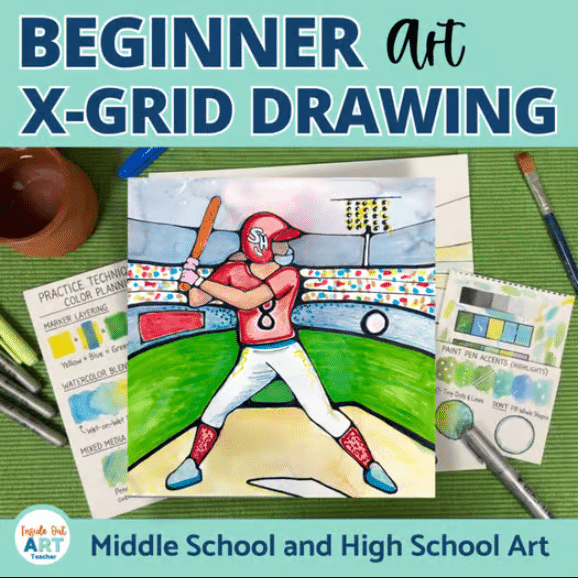
If you’ve been searching for a way to start strong, reach your non-art kids, and build confidence without sacrificing creativity, this easy line drawing art project for high schoolers might be exactly what your classroom needs.
Wearable Art Teacher Energy
Art Teacher Because Wizard Isn’t an Option
Different Department, Different Species
Art Because Math Has Too Many Rules
beginner art lessons for middle school and high school | beginner art lessons for middle school and high school | beginner art lessons for middle school and high school | beginner art lessons for middle school and high school| beginner art lessons for middle school and high school | beginner art lessons for middle school and high school | beginner art lessons for middle school and high school | beginner art lessons for middle school and high school | beginner art lessons for middle school and high school| beginner art lessons for middle school and high school
Be the first to know about discounts, freebies, and new resources!
Find me on my blog – Inside Out Art Teacher, YouTube, or Instagram.
art projectinner art lessons for middle school and high school|