
There’s a moment most art teachers hit while planning that doesn’t get talked about much.
It’s usually late in the day.
Your prep time is gone.
Your next unit is coming up fast.
And you’re staring at your lesson plans thinking:
Okay… what am I actually going to teach next?
Not in a big, philosophical way. In a very real, practical way.
You’re thinking about this group of students.
The beginners who panic when they don’t know where to start.
The confident kids who fly through everything and get bored easily.
The students who insist they “can’t draw,” usually before they’ve even tried.
And the ones who technically do the work, but rush through just to be done.
You want beginner drawing lessons that feel supportive, not frustrating.
Structured, but not rigid.
Creative, but not overwhelming.
And ideally… something you don’t have to spend hours prepping or explaining.
That balance is harder than it sounds.
Especially if you’re not ready to commit to a full curriculum yet, or you’re trying to piece together lessons that actually work for this mix of students, in this classroom, right now.
For a long time, I felt stuck choosing between two options when I planned beginner drawing lessons:
Projects that were so open-ended my beginners didn’t know how to start.
Or highly scripted lessons that technically “worked,” but left students disengaged and disconnected from their own work.
Neither felt like the right answer.
What I needed were no-prep beginner drawing lessons for middle school and high school that I could trust.
Lessons I could pull out when I needed calm focus.
Or confidence building.
Or a reliable plan that wouldn’t fall apart halfway through the period.
And that realization changed how I look at beginner art lessons entirely.
Because the challenge isn’t getting students to draw.
It’s meeting them where they already are before the lesson even begins.
Why Beginner Art Lessons Are So Tricky (Especially in Middle & High School)

By the time students reach middle school or high school, many of them already have strong feelings about art.
Some feel confident and comfortable.
Some feel anxious but willing.
And some have quietly decided that art just isn’t for them.
Those students usually aren’t unmotivated. They’re cautious.
They’ve learned that starting feels risky.
They don’t want to do it “wrong.”
They don’t want their work compared to others.
They don’t want to confirm the belief that they’re “bad at art.”
When beginner drawing lessons don’t offer enough structure, those students shut down.
When lessons offer too much structure, students disengage in a different way.
What most teachers are actually searching for are beginner drawing lessons for middle school and high school that support students without taking over.
Lessons that guide, but don’t dictate.
Lessons that scaffold, but don’t suffocate creativity.
Once I started seeing that pattern clearly, it changed how I evaluated every beginner lesson I used.
I stopped asking, “Is this creative enough?”
And started asking, “Does this help students feel capable?”
What I Look for in Beginner Drawing Lessons Now
After years of trial and error, here’s what I’ve learned to prioritize:
- a clear starting point so students don’t panic
- visual support so directions don’t have to be repeated nonstop
- flexible materials so lessons work in different situations
- choices that let students make the work feel personal
- a finished result students are genuinely proud to turn in
Over time, I noticed I kept reaching for the same types of lessons.
Not because they were flashy, but because they worked.
They calmed the room.
They reduced anxiety.
They helped students finish something that actually looked intentional.
Eventually, those lessons became my safety net.
That’s where the Easy Beginner Drawing Bundle came from.
Not as a rigid system.
Not as a required sequence.
But as a collection of reliable, no-prep beginner drawing lessons you can pull from whenever your students need more support, more confidence, or a slower pace.
What Teachers Actually Get From Each Lesson in the Beginner Drawing Bundle
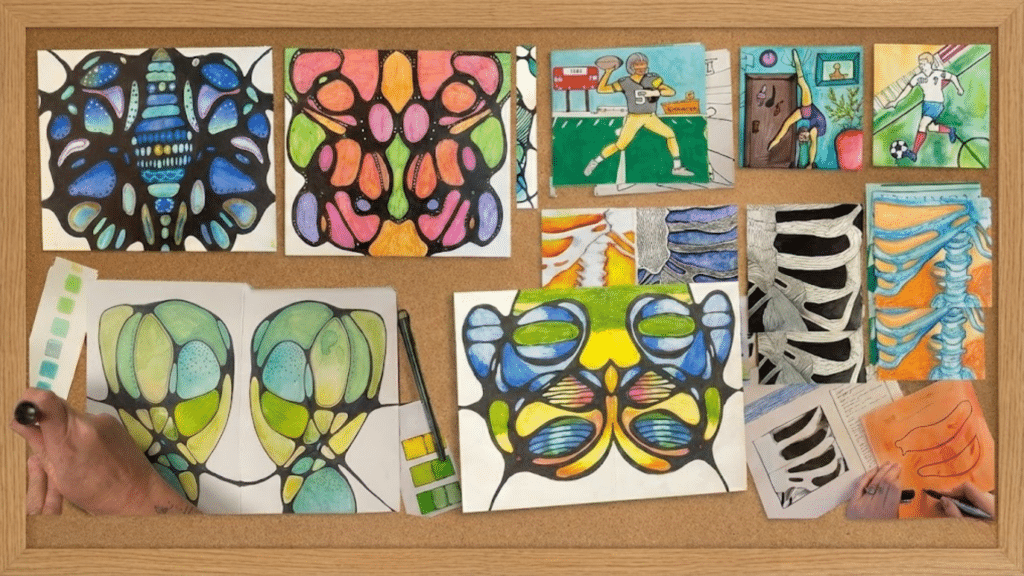
This bundle works because each lesson solves a different beginner struggle using a different foundational art concept.
You are not buying three versions of the same activity.
You are getting three dependable options you can use throughout the year, in any order, depending on what your students need that week.
While each lesson absolutely works on its own, I also teach them in a specific order when I want to intentionally build confidence at the beginning of the year. That sequence removes pressure one step at a time, so students never feel overwhelmed as skills build.
Here’s what that looks like in real classrooms.
Reflective Symmetry Neurographic Art
The First Lesson in the Sequence (Low Pressure, High Confidence)

This lesson intentionally comes first in the sequence.
When I’m planning beginner drawing lessons, especially at the start of the year, my goal isn’t to see how much students can do yet. It’s to help them feel safe picking up a pencil at all.
Some days, your students don’t need more excitement.
They need grounding.
This reflective symmetry neurographic art lesson is where I start because it removes the biggest pressure right away: realism.
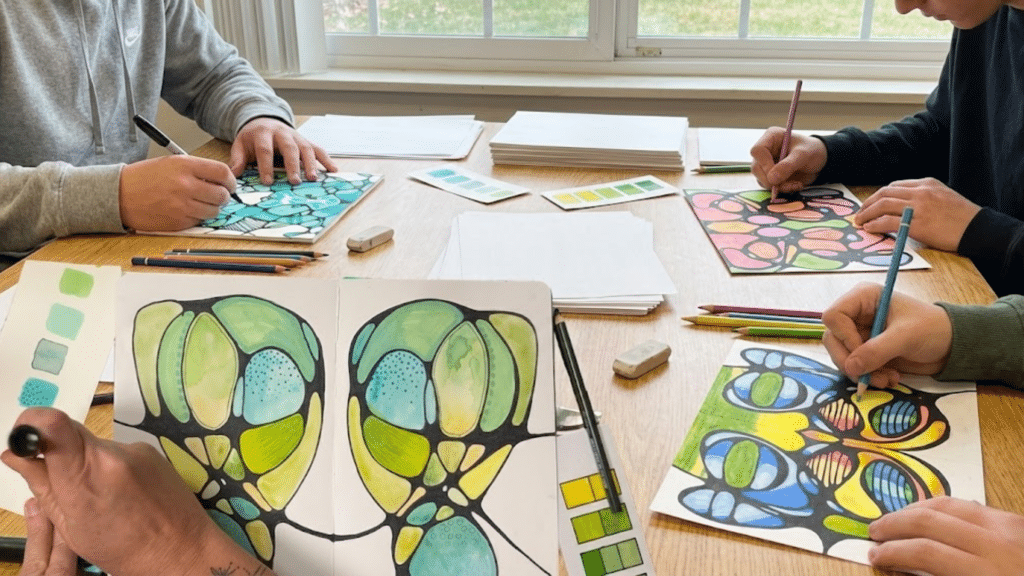
There’s no intimidating subject matter. No expectation that something needs to “look right.” Students focus instead on line quality, flow, and movement. They practice creating thick-to-thin lines, rounded intersections, and continuous paths without worrying about drawing an object correctly.
That matters more than it sounds.
For students who are nervous about drawing, this lesson feels approachable. For students who already feel confident, it still feels engaging and intentional. Everyone starts on equal footing.
The symmetry gives students a clear starting point. The neurographic line work removes pressure to be perfect. If a line goes somewhere unexpected, it blends into the design instead of standing out as a mistake.
As students work, you can feel the shift.
They slow down without being told to slow down.
They stay focused longer than usual.
They stop asking, “Is this right?” every few minutes.
The color portion of the lesson reinforces analogous color schemes in a way that feels intuitive instead of academic. Students experiment, layer, and adjust color without fear of ruining their work because the structure underneath is already strong.
This is why it works so well as:
- a first-week or first-day-of-school art lesson
- a confidence builder for hesitant artists
- a reset after long breaks
- a mindful or SEL-focused art activity
Most importantly, students finish this project feeling successful. That confidence carries directly into the next lesson, where structure is introduced more explicitly. disengage end up quietly invested. And the finished work always looks thoughtful and display-worthy.
By the time students finish the reflective symmetry lesson, they’ve already had an early win. They’ve practiced line control, built confidence, and experienced success without the pressure of realism.
That’s exactly why the next lesson introduces structure gently instead of all at once.
Negative Space Skeleton Drawing
Introducing Structure Without Killing Creativity
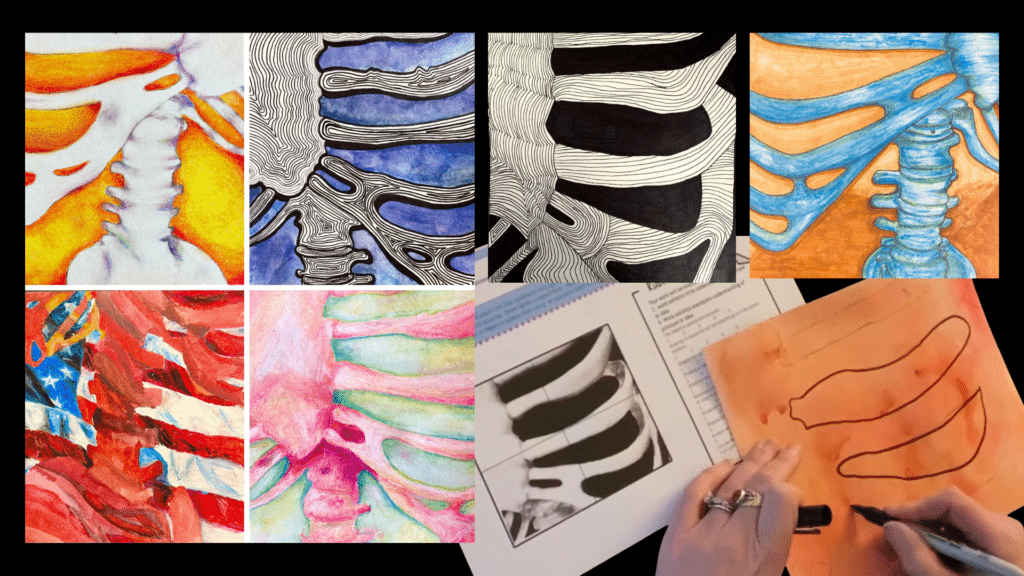
This lesson intentionally comes second in the sequence.
After students build confidence with flowing lines and low-pressure mark making, they’re ready for their first real drawing “challenge,” but only in a way that still feels manageable.
In the Negative Space Skeleton Drawing, students are introduced to the X-grid for the first time. Instead of using it to draw a complex image, they use it to break a very simple subject into small, readable shapes. The focus isn’t perfection. It’s learning how to see.
Negative space is one of those concepts that sounds simple… until students try it.
Most beginners draw symbols.
They draw what they think they see.
And when things don’t look right, frustration sets in fast.
This lesson gently retrains their eyes.
Instead of outlining bones, students learn to notice the shapes around the bones. The background becomes just as important as the subject, and that mental shift is huge for beginners.
You can actually see the confidence from the first lesson carry over.
Students hesitate less.
They trust the grid instead of fighting it.
They slow down naturally, one square at a time.
And once the structure is in place, creativity opens back up.
Students choose how to fill the positive or negative space using patterns, text, collage, zen doodles, or mixed materials. Two students can work from the same reference image and end up with completely different results.
This lesson works so well because it teaches structure without making students feel boxed in.
Teachers love this lesson because:
- it introduces the X-grid in a low-stakes way
- it teaches observation before detail
- it balances accuracy with creative freedom
- it builds on confidence instead of replacing it
This is the bridge lesson. Students now understand both line quality and how to see shapes, which sets them up perfectly for the final project in the sequence.
At this point, students have practiced flowing lines and learned how to break images into manageable sections. Now they’re ready to put those skills together in a way that finally makes drawing feel intentional.
X-Grid Beginner Drawing Lesson
Where Everything Finally Clicks

This drawing-with-an-x-grid lesson is intentionally placed third.
By now, students aren’t starting from zero. They bring real skills with them into this project.
They already know how to control their lines from the neurographic lesson.
They already understand how the X-grid supports placement from the negative space drawing.
This is where those two ideas finally come together.
Instead of feeling overwhelmed by a full image, students approach drawing methodically. They map placement first, then refine lines, then add detail. The process mirrors how artists actually work, which is a powerful shift for beginners.
The reference images matter here. Sports and animals are intentional choices. When students see subjects that reflect their interests, buy-in increases immediately, especially for teenage boys and apathetic “non-art” students who usually check out.
This is often the moment when students say things like:
“Oh… I get it now.”
“This actually makes sense.”
“I didn’t think I could do this.”
Because now, they can.
Teachers reach for this lesson when they want:
- a true beginner drawing lesson that still feels challenging
- a project that works with mixed ability levels
- fewer “what do I do next?” questions
- finished work students are genuinely proud of
This is the payoff lesson. Not because it’s harder, but because it feels earned.
Students don’t feel like they’re guessing anymore. They feel like they have tools.
When taught in this order, these three lessons don’t just teach drawing. They teach students how to approach challenges with patience, structure, and confidence.
Want These Lessons Ready to Go?
If you’re looking for beginner drawing lessons that help all students feel capable, not just the confident artists, this bundle was built for you.
Inside the Easy Beginner Drawing Bundle, you’ll find:

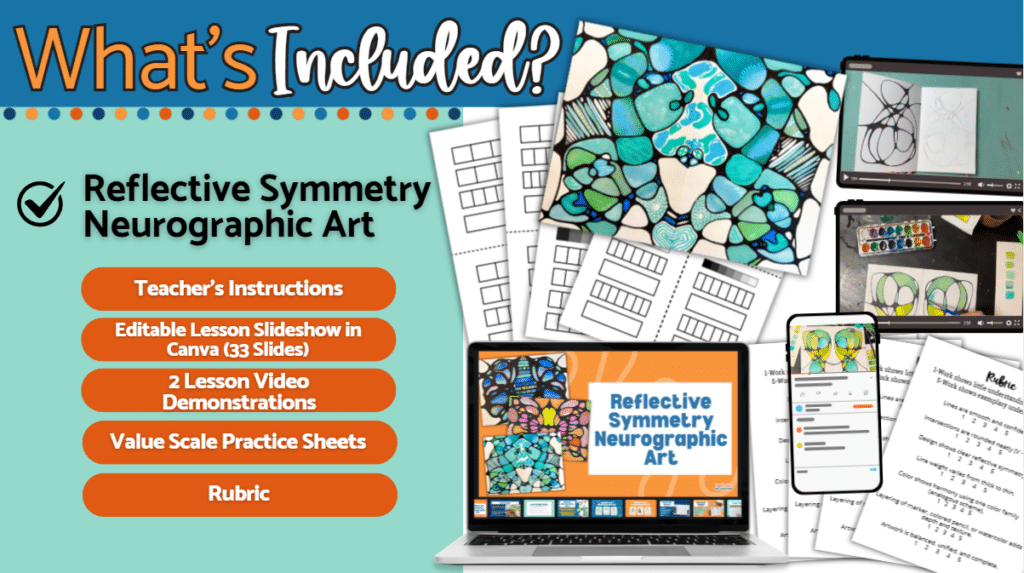

- three complete, no-prep drawing lessons
- clear visual guidance that supports beginners
- flexible projects that work in any order
- lessons that balance structure with self-expression
These are the lessons I reach for when I want students to feel successful without lowering expectations.

If you’ve been searching for dependable, beginner-friendly art lessons that actually work in real classrooms, this might be exactly what you’ve been missing.
Be the first to know about discounts, freebies, and new resources!
Find me on my blog – Inside Out Art Teacher, YouTube, or Instagram.
beginner drawing lessons | beginner drawing lessons | beginner drawing lessons | beginner drawing lessons | beginner drawing lessons | beginner drawing lessons | beginner drawing lessons | beginner drawing lessons | beginner drawing lessons | beginner drawing lessons | beginner drawing lessons | beginner drawing lessons | beginner drawing lessons | beginner drawing lessons | beginner drawing lessons | beginner drawing lessons |